
#ContentStrategy
'Maximizing LinkedIn for Business Growth' Book References and Incorporates Scott M. Graffius' 'Lifespan (Half-Life) of Social Media Posts' Research
18 September 2024
BY SCOTT M. GRAFFIUS | ScottGraffius.com


Maximizing LinkedIn for Business Growth by Neal Schaffer References and Incorporates Scott M. Graffius' 'Lifespan (Half-Life) of Social Media Posts' Research
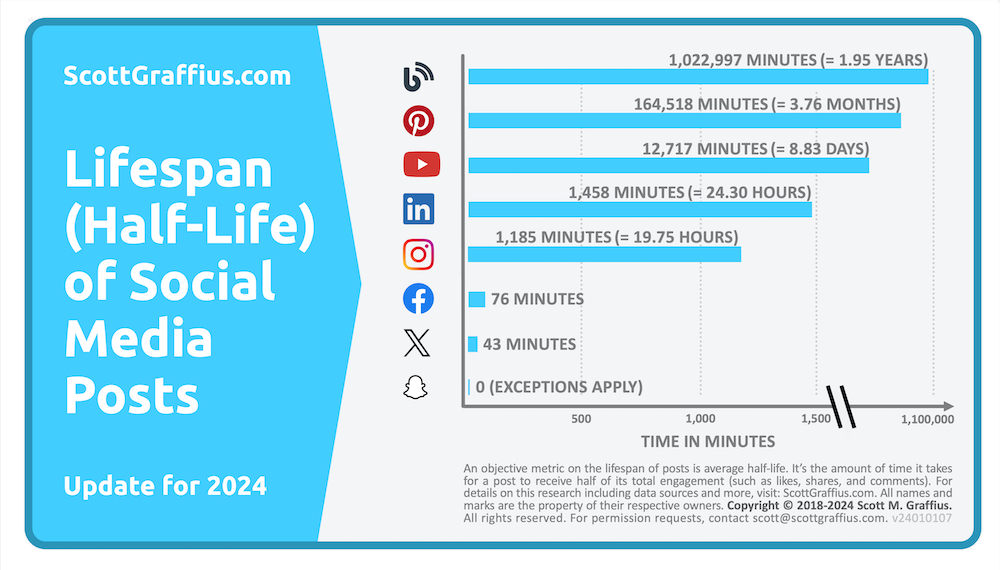
When content is published online, relevance and engagement have a limited lifespan. An advantageous objective metric is half-life. It’s the time it takes for a post to receive half of its total engagement (such as likes, shares, and comments). Data can help inform strategic and tactical decisions, such as the frequency and scheduling of posts.
Reports by others related to the shelf life of social media are often outdated or based on the experience of one person, one organization, or one limited set of data. With any of those common limitations, findings are at risk of being non-representative, inaccurate, or unreliable.
It’s important to have a large dataset from multiple sources. In addition to generating results that are more likely to be appropriately representative, accurate, and reliable, this approach provides a more complete picture and helps identify trends.
In 2018, Scott M. Graffius first published data on the average lifespan (half-life) of posts on Snapchat, X (formerly Twitter), Facebook, Instagram, LinkedIn, YouTube, Pinterest, and blogs based on a large dataset comprised of multiple, diverse sources. Algorithms and other factors on platforms change over time. For that reason, Graffius periodically updates the analysis.
The visual for the current (2024) edition of his ‘Lifespan (Half-Life) of Social Media Posts’ is shown below and the details are here.
Scientists, researchers, journalists, academics, YouTubers, podcasters, digital marketing experts, businesses, government agencies, and others around the world have featured and used Scott M. Graffius’ ‘Lifespan (Half-Life) of Social Media Posts’ research. Here are some examples:
And many more.
Neal Schaffer's Maximizing LinkedIn for Business Growth: A Practical Guide to Building Your Brand and Driving Results is now also on the list. Some visuals follow.
Excerpt 1 is below. It shows the book cover image for Maximizing LinkedIn for Business Growth.

Excerpt 2 is next. It shows that the LinkedIn’s Content Visibility and Organic Reach section of Maximizing LinkedIn for Business Growth incorporates Graffius’ research (noted with citation “11” — which is delineated in the References section of the book).

Excerpt 3 is below. It shows the References section of Maximizing LinkedIn for Business Growth, indicating Graffius’ research.

Excerpt 4 is next. It shows the References section of Maximizing LinkedIn for Business Growth, indicating Graffius’ research (as a zoomed-in view).

Excerpt 5 is below. A snapshot of stats on 18 September 2024 (one day after the release of Maximizing LinkedIn for Business Growth) shows that Amazon.com ranked the book as #1 in multiple categories.

To learn more about Graffius' ‘Lifespan (Half-Life) of Social Media Posts’ research, visit here.

This article uses limited excerpts from Maximizing LinkedIn for Business Growth: A Practical Guide to Building Your Brand and Driving Results and Amazon.com, attributed to Neal Schaffer and Amazon.com, respectively, and used under fair use for news reporting and analysis. Maximizing LinkedIn for Business Growth: A Practical Guide to Building Your Brand and Driving Results is copyright © Neal Schaffer. Content on Amazon.com is the property of Amazon.com, Inc. Graffius’ ‘Lifespan (Half-Life) of Social Media Posts’ is copyright © Scott M. Graffius.

About Neal Schaffer
Neal Schaffer is a globally recognized digital marketing consultant, Fractional CMO, keynote speaker, corporate trainer, university educator, and author of six books, including Maximize Your Social: A One-Stop Guide to Building a Social Media Strategy for Marketing and Business Success, The Age of Influence: The Power of Influencers to Elevate Your Brand, Maximizing LinkedIn for Business Growth: A Practical Guide to Building Your Brand and Driving Results, and Digital Threads: The Small Business and Entrepreneur Playbook for Digital First Marketing. Visit https://nealschaffer.com to learn more about Neal.

About Maximizing LinkedIn for Business Growth: A Practical Guide to Building Your Brand and Driving Results
The following is based on description for the book on Amazon.com.
In today’s digital-first economy, LinkedIn has become the ultimate platform for professionals to grow their personal brands, generate leads, and establish industry authority. Whether you’re a salesperson, entrepreneur, small business owner, service provider, or content creator, Maximizing LinkedIn for Business Growth equips you with the actionable tools and proven strategies to fully leverage LinkedIn’s vast potential.

About Scott M. Graffius

Scott M. Graffius is a global leader in agile project management, an expert on teamwork tradecraft, an authority on temporal dynamics on social media platforms, a creator, a consultant, a trainer, an award-winning author, and an international public speaker.
He's generated over $1.9 billion of business value in aggregate for Global Fortune 500 businesses and other organizations he's served. Businesses and industries range from consumer products to advanced technology (including AI, R&D), e-commerce, music, streaming/OTT video, television, film, video games, financial services, government, and more.
Graffius and content from his books (Agile Scrum and Agile Transformation), talks, workshops, and more have been featured and used by businesses, professional associations, governments, and universities around the world. Examples include Adobe, American Management Association, Amsterdam Public Health Research Institute, Bayer, Boston University, Broadcom, Cisco, Deimos Aerospace, DevOps Institute, EU's European Commission, Ford Motor Company, Hasso Plattner Institute Germany, IEEE, Johns Hopkins University, London South Bank University, Microsoft, National Academy of Sciences, New Zealand Government, Oracle, Project Management Institute, Torrens University Australia, UC San Diego, TBS Switzerland, UK Sports Institute, University of Galway Ireland, U.S. Department of Energy, U.S. National Park Service, U.S. Tennis Association, Virginia Tech, Warsaw University of Technology, Yale University, Zurich University of Applied Sciences, and many others.
He delights audiences around the world with dynamic and engaging talks and workshops. He's presented sessions at 91 conferences and other events across 25 countries. Visit here to learn more and here to ask Scott to speak at your event.


About Agile Scrum: Your Quick Start Guide with Step-by-Step Instructions
Shifting customer needs are common in today's marketplace. Businesses must be adaptive and responsive to change while delivering an exceptional customer experience to be competitive.
There are a variety of frameworks supporting the development of products and services, and most approaches fall into one of two broad categories: traditional or agile. Traditional practices such as waterfall engage sequential development, while agile involves iterative and incremental deliverables. Organizations are increasingly embracing agile to manage projects, and best meet their business needs of rapid response to change, fast delivery speed, and more.
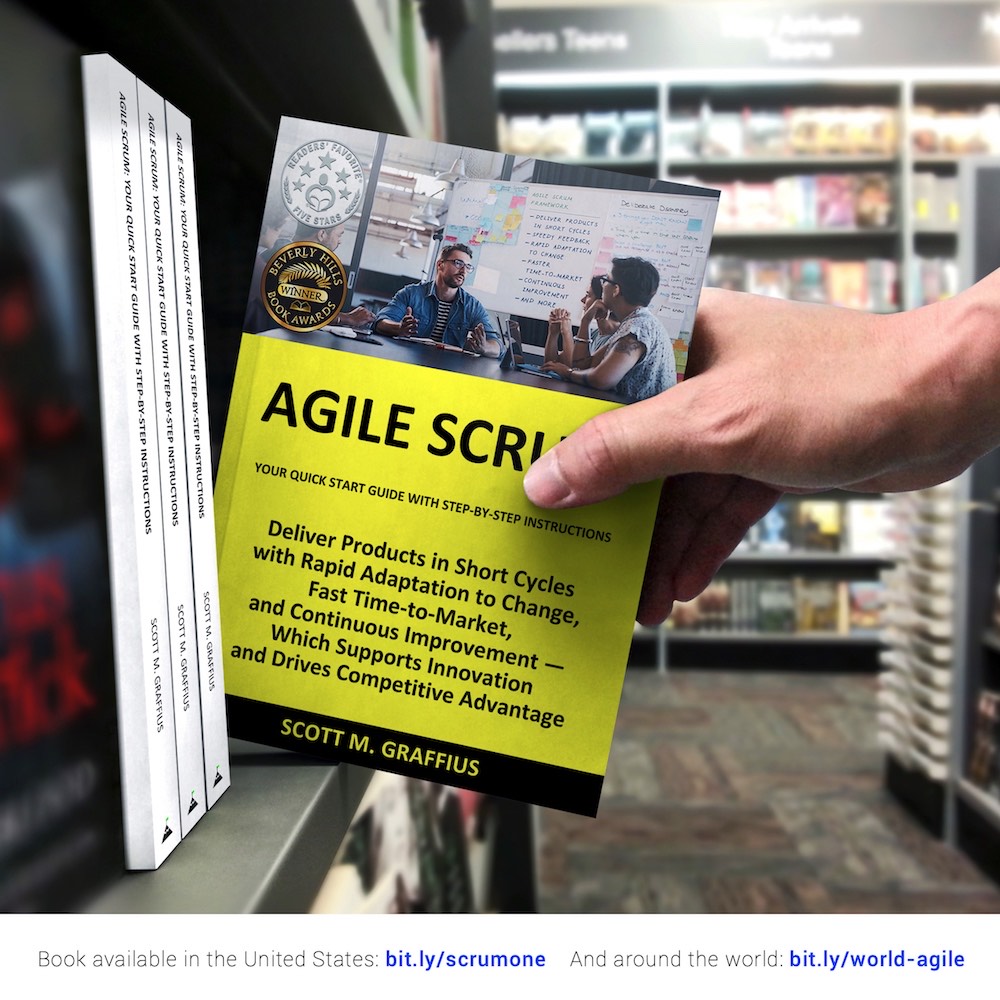
With clear and easy to follow step-by-step instructions, Scott M. Graffius's award-winning Agile Scrum: Your Quick Start Guide with Step-by-Step Instructions helps the reader:
Hailed by Literary Titan as “the book highlights the versatility of Scrum beautifully.”
Winner of 17 first place awards.
Agile Scrum: Your Quick Start Guide with Step-by-Step Instructions is available in paperback and ebook/Kindle in the United States and around the world. Some links by country follow.

About Agile Transformation: A Brief Story of How an Entertainment Company Developed New Capabilities and Unlocked Business Agility to Thrive in an Era of Rapid Change
Thriving in today's marketplace frequently depends on making a transformation to become more agile. Those successful in the transition enjoy faster delivery speed and ROI, higher satisfaction, continuous improvement, and additional benefits.
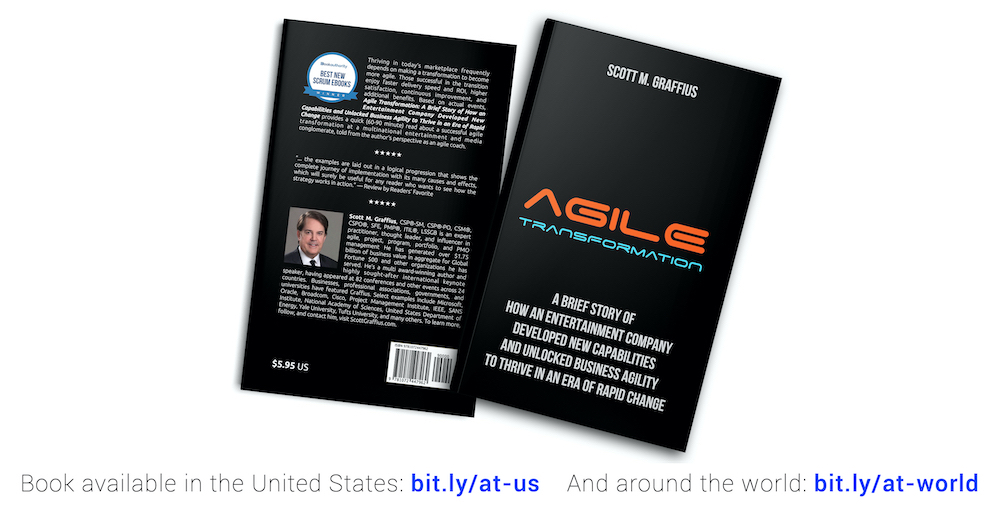
Based on actual events, Agile Transformation: A Brief Story of How an Entertainment Company Developed New Capabilities and Unlocked Business Agility to Thrive in an Era of Rapid Change provides a quick (60-90 minute) read about a successful agile transformation at a multinational entertainment and media company, told from the author's perspective as an agile coach.
The award-winning book by Scott M. Graffius is available in paperback and ebook/Kindle in the United States and around the world. Some links by country follow.


How to Cite This Article
Graffius, Scott M. (2024, September 18). 'Maximizing LinkedIn for Business Growth' Book References and Incorporates Scott M. Graffius' 'Lifespan (Half-Life) of Social Media Posts' Research. Available at: https://scottgraffius.com/blog/files/maximizing-linkedin.html. DOI: 10.13140/RG.2.2.19040.08969.


Post-Publication Notes
If there are any supplements or updates to this article after the date of publication, they will appear here.

A PDF of this article is here
The short link for this article is https://bit.ly/in-max
© Copyright 2024 Scott M. Graffius. All rights reserved. This material may not be published, broadcast, rewritten or redistributed without the express written permission of Scott M. Graffius.

Maximizing LinkedIn for Business Growth by Neal Schaffer References and Incorporates Scott M. Graffius' 'Lifespan (Half-Life) of Social Media Posts' Research
When content is published online, relevance and engagement have a limited lifespan. An advantageous objective metric is half-life. It’s the time it takes for a post to receive half of its total engagement (such as likes, shares, and comments). Data can help inform strategic and tactical decisions, such as the frequency and scheduling of posts.
Reports by others related to the shelf life of social media are often outdated or based on the experience of one person, one organization, or one limited set of data. With any of those common limitations, findings are at risk of being non-representative, inaccurate, or unreliable.
It’s important to have a large dataset from multiple sources. In addition to generating results that are more likely to be appropriately representative, accurate, and reliable, this approach provides a more complete picture and helps identify trends.
In 2018, Scott M. Graffius first published data on the average lifespan (half-life) of posts on Snapchat, X (formerly Twitter), Facebook, Instagram, LinkedIn, YouTube, Pinterest, and blogs based on a large dataset comprised of multiple, diverse sources. Algorithms and other factors on platforms change over time. For that reason, Graffius periodically updates the analysis.
The visual for the current (2024) edition of his ‘Lifespan (Half-Life) of Social Media Posts’ is shown below and the details are here.
Scientists, researchers, journalists, academics, YouTubers, podcasters, digital marketing experts, businesses, government agencies, and others around the world have featured and used Scott M. Graffius’ ‘Lifespan (Half-Life) of Social Media Posts’ research. Here are some examples:
- Bensley, Robert J., & Brookins-Fisher, Jodi (2023, December 14). Community and Public Health Education Methods: A Practical Guide—Fifth Edition. Burlington, MA: Jones & Bartlett Learning. [The authors cover Graffius’ work in Chapter 10 (Using Social Media) and list Graffius’ work as reference number 84 on page 256. A link to the publication at Google Books is here: https://bit.ly/cphem-5.]
- Berkessel, Juergen (2021, October 27). How Evergreen Posting on Social Media for Podcasters Creates Growth. Season 1, Episode 9 of the Podcasting Strategy Show. Available at: https://polymash.com/evergreen-posting. [The podcast references Graffius’ research. Show notes include Graffius’ “Lifespan (Half-Life) of Social Media Posts” visual as well as a hyperlink to Graffius’ full report.]
- Buffer (2024, February 7). 9 Ways to Grow Your Following on X/Twitter. Available at: https://buffer.com/resources/get-more-followers-on-twitter-x/. [It has a hyperlink to Graffius’ research.]
- Burton, Taylor (2022, November 2). Social Media Marketing: Leveraging LinkedIn. Pennsylvania Bar Institute. Available at: https://go.pbi.org/blog/social-media-marketing-leveraging-linkedin. [In the article, “LinkedIn posts are shown to have a longer lifespan” is hyperlinked to Graffius’ research.]
- Center for Direct Marketing (2024, March 25). Best Marketing Podcasts, Lifespan of Social Media and Blog Posts. Available at: https://dmcenter.com/march-2024/. [The article references, and has a link to, Graffius’ research.]
- Center for Direct Marketing (2022, September 27). What Is the Average Lifespan of a Blog or Social Media Post? Available at: https://dmcenter.com/lifespan-of-a-post. [The article includes data from Graffius and a hyperlink to his research.]
- Chowdhary, Tanish (2023, March 21). 13 Best Twitter Thread Tools to Go Viral in 2023. Geekflare. Available at: https://geekflare.com/best-twitter-thread-tools. [The article includes Graffius’ “Lifespan (Half-Life) of Social Media Posts” visual and a hyperlink to Graffius’ research.]
- Confederation of European Waste-to-Energy Plants (CEWEP) (2023, June 15). The Power of Social Media and How to Use It. 10th CEWEP Waste-to-Energy Congress, 14th - 16th June 2023, Berlin. Available at: https://www.cewep.eu/congress2023presentations/ and https://www.cewep.eu/wp-content/uploads/2023/06/4.1-Monika-Michalska.pdf. [CEWEP Congress presentation slide 9 featured Graffius’ visual, representing a summary of his research findings.]
- Degraux, Xavier (2022, November 5). Quelle est la Durée d’un Post sur Twitter, Instagram, LinkedIn. Available at: https://www.xavierdegraux.be/quelle-est-la-duree-dun-post-sur-twitter-instagram-linkedin. [In his article, Xavier Degraux — a social networks and content marketing consultant based in Belgium — discussed Graffius' work and provided a hyperlink to the research. Here's the title in English: How Long is a Post on Twitter, Instagram, LinkedIn.]
- Encompass Online Marketing (2023, March 15). How Often Should You Publish New Content? Available at: https://encompassonline.ca/blog/how-often-should-you-publish-new-content. [Among other points, the article references the lifespan of tweets and has a hyperlink to Graffius’ research.]
- Fallah, Georges (2023, December 18). The Best Times to Post on Social Media. Available at: https://www.vbout.com/blog/the-best-times-to-post-on-social-media. [The article has hyperlinks to Graffius’ research.]
- Gebauer, Susanna (2022, October 25). Twitter Scheduling: How to Schedule Tweets for More Impact. Available at: https://susannagebauer.com/blog/twitter-scheduling/. [The article includes a link to Graffius' research.]
- Geyser, Werner (2023, September 20). 34 Mind-blowing Pinterest Stats for 2023. Influencer Marketing Hub. Available at: https://influencermarketinghub.com/pinterest-stats. [The article references the durations of “three months” and provides a hyperlink to Graffius’ research.]
- GoDaddy (2023, February 20). How to Do Social Media: A Guide for Small Businesses and Entrepreneurs. Available at: https://www.godaddy.com/resources/skills/how-to-do-social-media. [In discussing the lifespan of tweets, the article provides a hyperlink to Graffius’ research.]
- Gotch, Nathan (2023, December 4). How to Start an SEO Business (2024 Update). Available at: https://www.gotchseo.com/start-seo-company/. [The article includes Graffius’ “Lifespan (Half-Life) of Social Media Posts” visual and a hyperlink to Graffius’ research.]
- Hawes, C. W. (2023, January 24). Social Media Half-Life. Available at: https://www.cwhawes.com/social-media-half-life. [The article identifies Graffius’ research and has a hyperlink to it.]
- Lin, Yunduan, & Wang, Mengxin, & Zhang, Heng, & Zhang, Renyu, & Shen, Zuo-Jun Max (2021, June 9; revised 2023, June 28). Content Promotion for Online Content Platforms with the Diffusion Effect. SSRN. Available at: https://papers.ssrn.com/sol3/papers.cfm?abstract_id=3863104 and https://dx.doi.org/10.2139/ssrn.3863104. [The scientific paper mentions Graffius’ work, and it delineates his research in the References section.]
- McErlain-Naylor, Stuart (2022, March 24). Social Media for Academia - All You Need to Know [Video]. Available at: https://www.youtube.com/watch?v=Ka88MxZbU8o. [At timestamp 13:59 in the video, Dr. Stuart McErlain-Naylor displays a visual which summarizes the 2022 edition of Graffius’ research.]
- MeetEdgar (2023, April 2). Everything You Need to Know About Repeating Social Media Content. Available at: https://meetedgar.com/blog/repeating-social-media-content. [This article from social media management tool company MeetEdgar discusses the lifespan of posts and it has a hyperlink to Graffius’ research.]
- Memom, Alafiya (2023, June 14). Master the Art of Using Pinterest for Blogging in 2023. ContentStudio. Available at: https://blog.contentstudio.io/pinterest-for-blogging. [The article rounds up the half-life of Pinterest pins as “4 months” and it includes a hyperlink to Graffius’ research.]
- Metricool (2023, October 31). YouTube Marketing in 2023. Available at: https://metricool.com/youtube-marketing. [The article includes “According to Scott Graffius’s data ...” and a hyperlink to Graffius’ research.]
- Patel, Neil (2023, May 23). 18 Powerful Twitter Marketing Tips [That Actually Work]. Neil Patel. Available at: https://neilpatel.com/blog/twitter-marketing-tips. [In the article, “The average lifespan of one tweet” has a hyperlink to Graffius’ research.]
- Pitzalis, Josh (2022, November 21). Finding Social Media Calendar Ideas for Twitter. Chirr App. Available at: https://getchirrapp.com/how-to/find. [The article references the half-life of a tweet and has a hyperlink to Graffius’ research.]
- Pugalia, Akash, & Lalani, Farah (2023, September 29). Digital Safety: How a Multi-Faceted Approach Can Help Tackle Real-World Harm. World Economic Forum. Available at: https://www.weforum.org/agenda/2023/09/digital-safety-multi-faceted-approach-tackle-real-world-harm. [The Proceedings of the National Academy of Sciences (PNAS) included data by Graffius on the half-life of social media. The World Economic Forum covered that PNAS study in their article.]
- Rainey, Clint (2023, August 15). Social Media’s Toxic Impact Can Last Up to 8 Days. This Behavioral Scientist’s Solution Might Surprise You. Available at: https://www.fastcompany.com/90939081/social-media-toxic-impact-content-moderation-solution-behavior-science. [The Proceedings of the National Academy of Sciences (PNAS) included Graffius’ research data on the half-life of social media. Fast Company covered that PNAS publication — and summarized Graffius’ data from it — in their article.]
- Rynek Pro (2023, June 26). Długość Życia Postów (Half-Life) w Mediach Społecznościowych w 2023 Roku. Available at: https://rynek.pro/half-life-dlugosc-zycia-postow/#pll_switcher. [Rynek Pro, a Poland-based advertising agency, featured Graffius’ research in their article. Here’s the title in English: Life Expectancy of Posts (Half-Life) in Social Media in 2023.]
- Schneider, Philipp J., & Rizoiu, Marian-Andrei (2023, August 22). The Effectiveness of Moderating Harmful Online Content. Proceedings of the National Academy of Sciences of the United States of America, 120 (34): e2307360120. Available at: https://www.pnas.org/doi/abs/10.1073/pnas.2307360120. DOI: 10.1073/pnas.2307360120. [The scientific paper references Graffius’ “Lifespan (Half-Life) of Social Media Posts” research and uses his data.]
- Strozyk, Kaylee (2023, November 3). 11 Tips on How to Use Pinterest for Real Estate. Fit Small Business. Available at: https://fitsmallbusiness.com/how-to-use-pinterest-for-real-estate-agents. [The article references that the half-life of Pinterest pins is “about 3.75 months.” Selecting the respective hyperlink brings up Graffius’ research.]
- Thailand TV News (2022, August 16). Half-Life of Each Social Media Post. Available at: https://thailandtv.news/half-life-of-each-social-media-post-thumbsup. [The article incorporates data from Graffius’ work and it has a hyperlink to his research.]
- The Tech Reps (2023, January 23). SEO or Social Media Marketing, Which is Better for Sales? [video]. Available at: https://www.youtube.com/watch?v=aVmQdHDXCrw. [The Tech Reps used Graffius’ “Lifespan (Half-Life) of Social Media Posts” visual as the background image in their video.]
- Two Rivers Marketing (2020, December 9). 8 Social Media Channels and Tactics to Consider Adding to Your Marketing Mix. Available at: https://www.tworiversmarketing.com/blog/8-social-media-channels-and-tactics-to-consider-adding-to-your-marketing-mix. [The article references the lifespan of posts and has a hyperlink to Graffius’ research.]
- Walters, Christy (2023, May 4). How To Curate Content for LinkedIn: Handpick Your Next Post. CopyPress. Available at: https://www.copypress.com/kb/social-media-promotion/curate-content-for-linkedin. [The article discusses the lifespan of a LinkedIn post and has a hyperlink to Graffius’ research.]
- What What SEO (2024, September 5). 5 bonnes raisons de créer un compte Pinterest si tu es entrepreneuse. (In English: 5 good reasons to create a Pinterest account if you are an entrepreneur). Available at: https://whatwhatseo.fr/creer-compte-pinterest-entreprise-avantages/. [The article incorporates Graffius’ research; to see the details, select 'Sources' located towards the end of the article.]
And many more.
Neal Schaffer's Maximizing LinkedIn for Business Growth: A Practical Guide to Building Your Brand and Driving Results is now also on the list. Some visuals follow.
Excerpt 1 is below. It shows the book cover image for Maximizing LinkedIn for Business Growth.
Excerpt 2 is next. It shows that the LinkedIn’s Content Visibility and Organic Reach section of Maximizing LinkedIn for Business Growth incorporates Graffius’ research (noted with citation “11” — which is delineated in the References section of the book).
Excerpt 3 is below. It shows the References section of Maximizing LinkedIn for Business Growth, indicating Graffius’ research.
Excerpt 4 is next. It shows the References section of Maximizing LinkedIn for Business Growth, indicating Graffius’ research (as a zoomed-in view).
Excerpt 5 is below. A snapshot of stats on 18 September 2024 (one day after the release of Maximizing LinkedIn for Business Growth) shows that Amazon.com ranked the book as #1 in multiple categories.
To learn more about Graffius' ‘Lifespan (Half-Life) of Social Media Posts’ research, visit here.
This article uses limited excerpts from Maximizing LinkedIn for Business Growth: A Practical Guide to Building Your Brand and Driving Results and Amazon.com, attributed to Neal Schaffer and Amazon.com, respectively, and used under fair use for news reporting and analysis. Maximizing LinkedIn for Business Growth: A Practical Guide to Building Your Brand and Driving Results is copyright © Neal Schaffer. Content on Amazon.com is the property of Amazon.com, Inc. Graffius’ ‘Lifespan (Half-Life) of Social Media Posts’ is copyright © Scott M. Graffius.
About Neal Schaffer
Neal Schaffer is a globally recognized digital marketing consultant, Fractional CMO, keynote speaker, corporate trainer, university educator, and author of six books, including Maximize Your Social: A One-Stop Guide to Building a Social Media Strategy for Marketing and Business Success, The Age of Influence: The Power of Influencers to Elevate Your Brand, Maximizing LinkedIn for Business Growth: A Practical Guide to Building Your Brand and Driving Results, and Digital Threads: The Small Business and Entrepreneur Playbook for Digital First Marketing. Visit https://nealschaffer.com to learn more about Neal.
About Maximizing LinkedIn for Business Growth: A Practical Guide to Building Your Brand and Driving Results
The following is based on description for the book on Amazon.com.
In today’s digital-first economy, LinkedIn has become the ultimate platform for professionals to grow their personal brands, generate leads, and establish industry authority. Whether you’re a salesperson, entrepreneur, small business owner, service provider, or content creator, Maximizing LinkedIn for Business Growth equips you with the actionable tools and proven strategies to fully leverage LinkedIn’s vast potential.
About Scott M. Graffius
Scott M. Graffius is a global leader in agile project management, an expert on teamwork tradecraft, an authority on temporal dynamics on social media platforms, a creator, a consultant, a trainer, an award-winning author, and an international public speaker.
He's generated over $1.9 billion of business value in aggregate for Global Fortune 500 businesses and other organizations he's served. Businesses and industries range from consumer products to advanced technology (including AI, R&D), e-commerce, music, streaming/OTT video, television, film, video games, financial services, government, and more.
Graffius and content from his books (Agile Scrum and Agile Transformation), talks, workshops, and more have been featured and used by businesses, professional associations, governments, and universities around the world. Examples include Adobe, American Management Association, Amsterdam Public Health Research Institute, Bayer, Boston University, Broadcom, Cisco, Deimos Aerospace, DevOps Institute, EU's European Commission, Ford Motor Company, Hasso Plattner Institute Germany, IEEE, Johns Hopkins University, London South Bank University, Microsoft, National Academy of Sciences, New Zealand Government, Oracle, Project Management Institute, Torrens University Australia, UC San Diego, TBS Switzerland, UK Sports Institute, University of Galway Ireland, U.S. Department of Energy, U.S. National Park Service, U.S. Tennis Association, Virginia Tech, Warsaw University of Technology, Yale University, Zurich University of Applied Sciences, and many others.
He delights audiences around the world with dynamic and engaging talks and workshops. He's presented sessions at 91 conferences and other events across 25 countries. Visit here to learn more and here to ask Scott to speak at your event.
About Agile Scrum: Your Quick Start Guide with Step-by-Step Instructions
Shifting customer needs are common in today's marketplace. Businesses must be adaptive and responsive to change while delivering an exceptional customer experience to be competitive.
There are a variety of frameworks supporting the development of products and services, and most approaches fall into one of two broad categories: traditional or agile. Traditional practices such as waterfall engage sequential development, while agile involves iterative and incremental deliverables. Organizations are increasingly embracing agile to manage projects, and best meet their business needs of rapid response to change, fast delivery speed, and more.
With clear and easy to follow step-by-step instructions, Scott M. Graffius's award-winning Agile Scrum: Your Quick Start Guide with Step-by-Step Instructions helps the reader:
- Implement and use the most popular agile framework―Scrum;
- Deliver products in short cycles with rapid adaptation to change, fast time-to-market, and continuous improvement; and
- Support innovation and drive competitive advantage.
Hailed by Literary Titan as “the book highlights the versatility of Scrum beautifully.”
Winner of 17 first place awards.
Agile Scrum: Your Quick Start Guide with Step-by-Step Instructions is available in paperback and ebook/Kindle in the United States and around the world. Some links by country follow.
- 🇧🇷 Brazil
- 🇨🇦 Canada
- 🇨🇿 Czech Republic
- 🇩🇰 Denmark
- 🇫🇮 Finland
- 🇫🇷 France
- 🇩🇪 Germany
- 🇬🇷 Greece
- 🇭🇺 Hungary
- 🇮🇳 India
- 🇮🇪 Ireland
- 🇮🇱 Israel
- 🇮🇹 Italy
- 🇯🇵 Japan
- 🇱🇺 Luxembourg
- 🇲🇽 Mexico
- 🇳🇱 Netherlands
- 🇳🇿 New Zealand
- 🇳🇴 Norway
- 🇪🇸 Spain
- 🇸🇪 Sweden
- 🇨🇭 Switzerland
- 🇦🇪 UAE
- 🇬🇧 United Kingdom
- 🇺🇸 United States
About Agile Transformation: A Brief Story of How an Entertainment Company Developed New Capabilities and Unlocked Business Agility to Thrive in an Era of Rapid Change
Thriving in today's marketplace frequently depends on making a transformation to become more agile. Those successful in the transition enjoy faster delivery speed and ROI, higher satisfaction, continuous improvement, and additional benefits.
Based on actual events, Agile Transformation: A Brief Story of How an Entertainment Company Developed New Capabilities and Unlocked Business Agility to Thrive in an Era of Rapid Change provides a quick (60-90 minute) read about a successful agile transformation at a multinational entertainment and media company, told from the author's perspective as an agile coach.
The award-winning book by Scott M. Graffius is available in paperback and ebook/Kindle in the United States and around the world. Some links by country follow.
- 🇦🇺 Australia
- 🇦🇹 Austria
- 🇧🇷 Brazil
- 🇨🇦 Canada
- 🇨🇿 Czech Republic
- 🇩🇰 Denmark
- 🇫🇮 Finland
- 🇫🇷 France
- 🇩🇪 Germany
- 🇬🇷 Greece
- 🇮🇳 India
- 🇮🇪 Ireland
- 🇯🇵 Japan
- 🇱🇺 Luxembourg
- 🇲🇽 Mexico
- 🇳🇱 Netherlands
- 🇳🇿 New Zealand
- 🇪🇸 Spain
- 🇸🇪 Sweden
- 🇨🇭 Switzerland
- 🇦🇪 United Arab Emirates
- 🇬🇧 United Kingdom
- 🇺🇸 United States
How to Cite This Article
Graffius, Scott M. (2024, September 18). 'Maximizing LinkedIn for Business Growth' Book References and Incorporates Scott M. Graffius' 'Lifespan (Half-Life) of Social Media Posts' Research. Available at: https://scottgraffius.com/blog/files/maximizing-linkedin.html. DOI: 10.13140/RG.2.2.19040.08969.
Post-Publication Notes
If there are any supplements or updates to this article after the date of publication, they will appear here.
A PDF of this article is here
The short link for this article is https://bit.ly/in-max
© Copyright 2024 Scott M. Graffius. All rights reserved. This material may not be published, broadcast, rewritten or redistributed without the express written permission of Scott M. Graffius.
How Algorithms Shape the User Experience on Social Media Platforms
26 September 2024
BY SCOTT M. GRAFFIUS | ScottGraffius.com

Introduction
More than 5.1 billion people use social media. Algorithms shape every social media interaction.
Social media platforms allow people to create, share, and exchange information and content with others. There are too many platforms to list, but eight examples include:
Algorithms on social media platforms are a unique set of mathematical rules and signals that determine what content to display to users, and in what order. Algorithms are both architects and gatekeepers of user experiences on the platforms.
Social media is central to many people’s daily lives. However, the platforms employ incredibly complex algorithms and they typically keep their details secret.
The impacts of algorithms are widespread and profound. They can influence opinions, shape narratives, and potentially dictate social behavior. This article reveals how algorithms shape the user experience on social media platforms. After this Introduction there are seven parts:
From Simple to Complex
Social media platforms initially relied on simple chronological feeds. However, when user engagement (such as likes, shares, and comments) exploded, platforms decided to develop and implement more sophisticated methods, principally algorithms. Then, engagement-based models shaped by algorithms took precedence. Content that users were more likely to interact with was prioritized.
The rise of artificial intelligence (AI) and machine (ML) learning has further transformed these algorithms into powerful tools. For better or worse, they are entirely capable of hyper-personalizing content which can significantly influence perceptions and decisions. AI and ML are also discussed later in this article.

General Mechanics
A complex web of data points and signals is at the core of social media algorithms. Algorithms are composed of including five fundamental components:
Benefits and Risks
Algorithms curate content to match the preferences of individuals. That can present both benefits and risks.
Four benefits of algorithmic curation include:
Three risks of algorithmic curation include:
Algorithm-Savvy Marketing
Businesses and marketers must have a good understanding of social media algorithms. Further, as the digital landscape changes over time, so must strategies. Here are six principles for navigating this complex terrain:
Ethical Considerations
Algorithms shape user experiences, and that power carries significant responsibility. Here are four key ethical points and questions:
The Future of Social Media Algorithms
The future of social media algorithms is certain to be exciting and daunting. Several trends are emerging. They may impact the future of algorithms in the following five ways:
Conclusion
Each algorithm is a complex set of mathematical rules and signals that determine what content to display to users, and in what order. That gives them the ability to empower or manipulate users. Simply put, algorithms have a big impact on user experiences on social media platforms. It’s suggested that users advocate for ethical, user-centric design in the development and deployment of these algorithms as well as user control and transparency. When platforms adopt those measures, users will have a better experience.
For the references, how to cite this article, information about the author and more, continue reading.


References/Sources

How to Cite this Article
Graffius, Scott M. (2024, September 26). How Algorithms Shape the User Experience on Social Media Platforms. Available at: https://scottgraffius.com/blog/files/algorithms-and-the-user-experience.html. DOI: 10.13140/RG.2.2.29149.01767.

About Scott M. Graffius
Scott M. Graffius is a global leader in agile project management, an expert on teamwork tradecraft, an authority on temporal dynamics on social media platforms, a creator, a consultant, a trainer, an award-winning author, and an international public speaker.
He's generated over $1.9 billion of business value in aggregate for Global Fortune 500 businesses and other organizations he's served. Businesses and industries range from consumer products to advanced technology (including AI and R&D), e-commerce, music, streaming/OTT video, television, film, video games, financial services, government, and more.
Graffius and content from his books (Agile Scrum and Agile Transformation), talks, workshops, and more have been featured and used by businesses, professional associations, governments, and universities around the world. Examples include Adobe, American Management Association, Amsterdam Public Health Research Institute, Bayer, Boston University, Broadcom, Cisco, Deimos Aerospace, DevOps Institute, EU's European Commission, Ford Motor Company, Hasso Plattner Institute Germany, IEEE, Johns Hopkins University, London South Bank University, Microsoft, National Academy of Sciences, New Zealand Government, Oracle, Project Management Institute, Torrens University Australia, UC San Diego, TBS Switzerland, UK Sports Institute, University of Galway Ireland, U.S. Department of Energy, U.S. National Park Service, U.S. Tennis Association, Virginia Tech, Warsaw University of Technology, Yale University, Zurich University of Applied Sciences, and many others.
He delights audiences around the world with dynamic and engaging talks and workshops. He's presented sessions at 91 conferences and other events across 25 countries. Visit here to learn more and here to ask Scott to speak at your event.
About Agile Scrum: Your Quick Start Guide with Step-by-Step Instructions
Shifting customer needs are common in today's marketplace. Businesses must be adaptive and responsive to change while delivering an exceptional customer experience to be competitive.
There are a variety of frameworks supporting the development of products and services, and most approaches fall into one of two broad categories: traditional or agile. Traditional practices such as waterfall engage sequential development, while agile involves iterative and incremental deliverables. Organizations are increasingly embracing agile to manage projects, and best meet their business needs of rapid response to change, fast delivery speed, and more.
With clear and easy to follow instructions, the multi award-winning Agile Scrum: Your Quick Start Guide with Step-by-Step Instructions book by Scott M. Graffius (Chris Hare and Colin Giffen, Technical Editors) helps the reader:
Hailed by Literary Titan as “the book highlights the versatility of Scrum beautifully.”
Winner of 17 first place awards.
Agile Scrum: Your Quick Start Guide with Step-by-Step Instructions is available in paperback and ebook/Kindle in the United States and around the world. Some links by country follow.

About Agile Transformation: A Brief Story of How an Entertainment Company Developed New Capabilities and Unlocked Business Agility to Thrive in an Era of Rapid Change
Thriving in today's marketplace frequently depends on making a transformation to become more agile. Those successful in the transition enjoy faster delivery speed and ROI, higher satisfaction, continuous improvement, and additional benefits.
Based on actual events, Agile Transformation: A Brief Story of How an Entertainment Company Developed New Capabilities and Unlocked Business Agility to Thrive in an Era of Rapid Change provides a quick (60-90 minute) read about a successful agile transformation at a multinational entertainment and media company, told from the author's perspective as an agile coach.
The award-winning book by Scott M. Graffius is available in paperback and ebook/Kindle in the United States and around the world. Some links by country follow.
Post-Publication Notes
If there are any supplements or updates to this article after the date of publication, they will appear here.
A PDF of this article is here
The short link for this article is: https://bit.ly/algo-ux
© Copyright 2024 Scott M. Graffius. All rights reserved. This material may not be published, broadcast, rewritten or redistributed without the express written permission of Scott M. Graffius.

Introduction
More than 5.1 billion people use social media. Algorithms shape every social media interaction.
Social media platforms allow people to create, share, and exchange information and content with others. There are too many platforms to list, but eight examples include:
- Facebook,
- Instagram,
- LinkedIn,
- Pinterest,
- Snapchat,
- TikTok,
- X (formerly Twitter),
- and YouTube.
Algorithms on social media platforms are a unique set of mathematical rules and signals that determine what content to display to users, and in what order. Algorithms are both architects and gatekeepers of user experiences on the platforms.
Social media is central to many people’s daily lives. However, the platforms employ incredibly complex algorithms and they typically keep their details secret.
The impacts of algorithms are widespread and profound. They can influence opinions, shape narratives, and potentially dictate social behavior. This article reveals how algorithms shape the user experience on social media platforms. After this Introduction there are seven parts:
- From Simple to Complex (the genesis of social media algorithms),
- General Mechanics (the components of algorithms),
- Benefits and Risks (the upside and downside of algorithms),
- Algorithm-Savvy Marketing,
- Ethical Considerations,
- The Future of Algorithms on Social Media Platforms, and
- Conclusion
From Simple to Complex
Social media platforms initially relied on simple chronological feeds. However, when user engagement (such as likes, shares, and comments) exploded, platforms decided to develop and implement more sophisticated methods, principally algorithms. Then, engagement-based models shaped by algorithms took precedence. Content that users were more likely to interact with was prioritized.
The rise of artificial intelligence (AI) and machine (ML) learning has further transformed these algorithms into powerful tools. For better or worse, they are entirely capable of hyper-personalizing content which can significantly influence perceptions and decisions. AI and ML are also discussed later in this article.
General Mechanics
A complex web of data points and signals is at the core of social media algorithms. Algorithms are composed of including five fundamental components:
- User Engagement: Engagement is at the heart of algorithms. The more users interact with specific content, the more likely it is to be promoted within feeds. This initiates a cycle where popular content gains even more prominence.
- Content Prioritization: Here are examples of how different social media platforms treat content. The terms “advances,” “favors,” and “prioritizes” are used interchangeably.
- Facebook advances live videos.
- Instagram favors images and videos.
- LinkedIn prioritizes thought leadership posts.
- Pinterest advances pins about recipes, home décor, and fashion; and pins that link to external websites such as blogs.
- Snapchat prioritizes content that uses filters and lenses.
- TikTok advances videos that receive high engagement rates within seconds of being posted.
- X increasingly favors videos.
- YouTube prioritizes long videos with high watch times.
- Content Relevance: Algorithms prioritize content that aligns with users’ preferences and history. For example, if a user frequently engages with fitness-related posts, the algorithm will likely serve them with similar content. That tactic can enhance user satisfaction, but it can also lead to echo chambers. Those are environments that expose users primarily to information that reinforces their existing beliefs.
- Freshness: Social media thrives on immediacy. Newer content often takes precedence over older posts. That compels brands, influencers, and others to maintain an apt posting schedule.
- Network Effects: Content gaining traction among a user’s network helps amplify its reach by spreading (more) rapidly, including possibly ‘going viral.’ There is no universal quantification for what constitutes ‘viral,’ but a post with 1 million or more views/impressions may qualify.
Benefits and Risks
Algorithms curate content to match the preferences of individuals. That can present both benefits and risks.
Four benefits of algorithmic curation include:
- Personalization: Individuals tend to interact more frequently with content that aligns with their preferences.
- Content Discovery: Algorithms can facilitate the introduction of content and accounts that users may not have encountered otherwise.
- Reduced Information Overload: Social media platforms house a massive volume of content. Algorithms may help filter out the noise. By prioritizing relevant posts, algorithms can help individuals to focus on what matters most to them.
- Enhanced Engagement: As users find more of the content they enjoy, they will likely spend more time on the platform. This increased engagement also benefits platforms as they can monetize the increased time and attention through advertising.
Three risks of algorithmic curation include:
- Echo Chambers and Polarization: The potential formation of echo chambers is the most concerning byproduct of algorithmic personalization. Users are at risk of being shielded from differing perspectives. That is especially the case with political discourse; those situations can lead to polarization or increased polarization.
- Risk of Promoting Incorrect Information: The algorithms that prioritize engagement can potentially (by design or inadvertently) boost sensationalist content or incorrect information.
- User Fatigue: Users may experience fatigue or disillusionment when they become aware of the potential negative effects of algorithms. Users who feel that their experiences are being engineered may lose trust in the platforms, and they may stop using them.
Algorithm-Savvy Marketing
Businesses and marketers must have a good understanding of social media algorithms. Further, as the digital landscape changes over time, so must strategies. Here are six principles for navigating this complex terrain:
- Prioritize Quality Over Quantity: Create meaningful, engaging, and relevant posts.
- Engage Authentically: Engage with one’s audience in genuine ways such as through storytelling, user-generated content, and responsive interactions.
- Embrace Video Content: Use videos as platforms are increasingly prioritizing that content.
- Stay Informed: Marketers should be on the lookout for changes and be responsive to them.
- Leverage Data Analytics: Informed by metrics, marketers can adjust their strategies when needed.
- Experiment and Adapt: Platforms are continuously changing. Users’ tastes may change as well. Marketers should experiment with different content types, posting schedules, and engagement tactics to discover what works best for their audience.
Ethical Considerations
Algorithms shape user experiences, and that power carries significant responsibility. Here are four key ethical points and questions:
- Transparency: Users deserve to understand how their data is used and how content is prioritized. Increased transparency can foster trust between users and platforms. Is the social media platform transparent about how its algorithm works.
- Algorithmic Bias: Algorithms are not immune to bias as they often reflect the prejudices in the data they analyze. Is the social media platform taking steps to remove bias wherever possible?
- Content Moderation: What role, if any, should platforms play in moderating content?
- User Well-Being: Is the platform primarily focused on providing a great user experience? Or is it about doing anything and everything possible to generate time on the platform and obtain a presumed corresponding increase in revenue?
The Future of Social Media Algorithms
The future of social media algorithms is certain to be exciting and daunting. Several trends are emerging. They may impact the future of algorithms in the following five ways:
- Increased Use of AI and ML: AI and ML will continue to play a role in refining algorithms. As the technologies advance, algorithms will become even more adept at understanding user preferences and predicting behavior.
- Greater Focus on User Control: Users are becoming more aware of their data and how it’s used. Platforms may offer control to users, allowing users to customize their feeds and manage their engagement preferences.
- Ethical Algorithm Design: Ethical frameworks that prioritize user well-being, transparency, and accountability may gain prominence in the future.
- Integration of AR and VR: Social media platforms may incorporate augmented reality (AR) and virtual reality (VR) elements into their algorithms in the future. If that happens, the result will be immersive user experiences that transcend traditional content consumption.
- Community-Centric Algorithms: Algorithms in the future may prioritize community engagement and collective interests.
Conclusion
Each algorithm is a complex set of mathematical rules and signals that determine what content to display to users, and in what order. That gives them the ability to empower or manipulate users. Simply put, algorithms have a big impact on user experiences on social media platforms. It’s suggested that users advocate for ethical, user-centric design in the development and deployment of these algorithms as well as user control and transparency. When platforms adopt those measures, users will have a better experience.
For the references, how to cite this article, information about the author and more, continue reading.
References/Sources
- Adobe (2023, September 8). Guide to Beating Social Media Algorithms. Available at: https://creativecloud.adobe.com/learn/express/web/increase-social-media-visibility.
- Alalwan, A. A. (2018). Investigating the Impact of Social Media Advertising Features on Customer Purchase Intention. International Journal of Information Management, 42: 65–77. DOI: https://doi.org/10.1016/j.ijinfomgt.2018.06.001.
- Allen, R., & Choudhury, P. (2022). Algorithm-Augmented Work and Domain Experience: The Countervailing Forces of Ability and Aversion. Organization Science, 33 (1): 149-169.
- Ananny, M. (2016). Toward an Ethics of Algorithms: Convening, Observation, Probability, and Timeliness. Science, Technology, and Human Values, 41(1): 93-117. DOI: https://doi.org/10.1177/0162243915606523.
- Bensley, Robert J., & Brookins-Fisher, Jodi (2023, December 14). Community and Public Health Education Methods: A Practical Guide—Fifth Edition. Burlington, MA: Jones & Bartlett Learning.
- Berberich, N., Nishida, T., & Suzuki, S. (2020). Harmonizing Artificial Intelligence for Social Good. Philosophy and Technology, 33: 613-638.
- Berkessel, Juergen (2021, October 27). How Evergreen Posting on Social Media for Podcasters Creates Growth. Season 1, Episode 9 of the Podcasting Strategy Show. Available at: https://polymash.com/evergreen-posting.
- Burton, Taylor (2022, November 2). Social Media Marketing: Leveraging LinkedIn. Pennsylvania Bar Institute. Available at: https://go.pbi.org/blog/social-media-marketing-leveraging-linkedin.
- Center for Direct Marketing (2022, September 27). What Is the Average Lifespan of a Blog or Social Media Post? Available at: https://dmcenter.com/lifespan-of-a-post.
- Cleland, C.E. (2001). Recipes, Algorithms, Programs. Minds and Machines, 11: 219-237.
- Colicev, Anatoli, & Malshe, Ashwin, & Pauwels, Koen, & O'Connor, Peter (2018). Improving Consumer Mindset Metrics and Shareholder Value Through Social Media: The Different Roles of Owned and Earned Media. Journal of Marketing, 82 (1): 37-56.
- Confederation of European Waste-to-Energy Plants (CEWEP) (2023, June 15). The Power of Social Media and How to Use It. 10th CEWEP Waste-to-Energy Congress, 14th - 16th June 2023, Berlin. Available at: https://www.cewep.eu/congress2023presentations/ and https://www.cewep.eu/wp-content/uploads/2023/06/4.1-Monika-Michalska.pdf.
- Degraux, Xavier (2022, November 5). Quelle est la Durée d’un Post sur Twitter, Instagram, LinkedIn. Available at: https://www.xavierdegraux.be/quelle-est-la-duree-dun-post-sur-twitter-instagram-linkedin.
- Encompass Online Marketing (2023, March 15). How Often Should You Publish New Content? Available at: https://encompassonline.ca/blog/how-often-should-you-publish-new-content.
- Expand My Business (2024, January 11). How to Leverage User Experience: UX in Digital Marketing. Available at: https://blog.emb.global/ux-in-digital-marketing/.
- Frau-Meigs, Divina.(2024, June). Algorithm Literacy as a Subset of Media and Information Literacy: Competences and Design Considerations. Digital, 4: 512-528. DOI: 10.3390/digital4020026.
- Graffius, Scott M. (2023, May 1). Fueling the Development of Innovative and Life-Changing AI Solutions [Presentation]. Talk delivered to an audience of Technology professionals (including Data Scientists, Machine Learning Engineers, Data Engineers, AI Researchers, Project Managers, Business Analysts, UX Designers, Software Developers, Cloud Architects, Data Privacy and Security Specialists, and others involved or interested in AI) at a private event in Mountain View, California, United States. Digital Object Identifier (DOI): 10.13140/RG.2.2.27956.73601. DOI link: https://dx.doi.org/10.13140/RG.2.2.27956.73601.
- Graffius, Scott M. (2024, January 1). Lifespan (Half-Life) of Social Media Posts: Update for 2024. Available at: https://scottgraffius.com/blog/files/social-24.html. DOI: 10.13140/RG.2.2.21043.60965.
- Grandinetti, J. (2021). Examining embedded apparatuses of AI in Facebook and TikTok. AI and Society, 38: 1273-1286. DOI: https://doi.org/10.1007/s00146-021-01270-5.
- Hill, R.K. (2013). What an Algorithm Is, and Is Not. Communications of the ACM, 56 (6): 8-9. DOI: 10.1145/2461256.2461260.
- IBM (n.d.). What Is Social Media Analytics. Available at: https://www.ibm.com/topics/social-media-analytics.
- John, Vanessa (2024, September 5). Website vs. Social Media - Do You Still Need a Site in 2024? Madgicx. Available at: https://madgicx.com/blog/website-and-social-media.
- Jwaniat, M. A. (2023). Examining Journalistic Practices in Online Newspapers in the Era of Artificial Intelligence. 2023 International Conference on Intelligent Computing, Communication, Networking and Services (ICCNS), Valencia, Spain, 2023, pp. 183-189, DOI: 10.1109/ICCNS58795.2023.10193607.
- Keller, J., Herrmann-Schwarz, T., Roitzheim, C., Mertens, L., Christin Brockmeier, L., & Kumar Purohit, A. (2024). A Digital Nudge-Based Intervention to Interrupt Instagram Usage: Randomized Controlled Pilot Study. European Journal of Health Psychology. DOI: https://dx.doi.org/10.1027/2512-8442/a000150.
- Lang, Kirsti (2023, November 6). Decoding the Facebook Algorithm in 2024: Everything You Need to Know. Available at: https://buffer.com/library/facebook-news-feed-algorithm/.
- Lin, Yunduan, & Wang, Mengxin, & Zhang, Heng, & Zhang, Renyu, & Shen, Zuo-Jun Max (2021, June 9; revised 2023, June 28). Content Promotion for Online Content Platforms with the Diffusion Effect. SSRN. Available at: https://papers.ssrn.com/sol3/papers.cfm?abstract_id=3863104 and https://dx.doi.org/10.2139/ssrn.3863104.
- Mahesh, B. (2020). Machine Learning Algorithms—A Review. International Journal of Science and Research (IJSR), 9 (1): 381-386. https://doi.org/10.21275/art20203995.
- Metzler, H., & Garcia, D. (2024). Social Drivers and Algorithmic Mechanisms on Digital Media. Perspectives on Psychological Science, 19 (5): 735-748. DOI: https://doi.org/10.1177/17456916231185057.
- Mosseri, Adam (2023, May 31). Instagram Ranking Explained. Available at: https://about.instagram.com/blog/announcements/instagram-ranking-explained/.
- Mosseri, Adam (2021, June 8). Shedding More Light on How Instagram Works. Available at: https://about.instagram.com/blog/announcements/shedding-more-light-on-how-instagram-works.
- Newberry, Christina (2023, October 25). How Does the LinkedIn Algorithm Work? [2024 Changes Explained]. Available at: https://blog.hootsuite.com/how-the-linkedin-algorithm-works-hacks/.
- Oladipo, Tamilore (2024, January 11). A 2024 Guide to the YouTube Algorithm: Everything You Need to Know to Boost Your Content. Available at: https://buffer.com/resources/youtube-algorithm/.
- Perreault, Marie-Catherine, & Mosconi, Elaine (2018). Social Media Engagement: Content Strategy and Metrics Research Opportunities. Proceedings of the 51st Hawaii International Conference on System Sciences: 3568-3577.
- Pinterest (2023, February 22). A More Positive Internet? It’s Possible. Available at: https://business.pinterest.com/blog/a-better-internet-is-possible/.
- Pugalia, Akash, & Lalani, Farah (2023, September 29). Digital Safety: How a Multi-Faceted Approach Can Help Tackle Real-World Harm. World Economic Forum. Available at: https://www.weforum.org/agenda/2023/09/digital-safety-multi-faceted-approach-tackle-real-world-harm.
- Rainey, Clint (2023, August 15). Social Media’s Toxic Impact Can Last Up to 8 Days. This Behavioral Scientist’s Solution Might Surprise You. Available at: https://www.fastcompany.com/90939081/social-media-toxic-impact-content-moderation-solution-behavior-science.
- Roberts, J. A., & David, M. E. (2020). The Social Media Party: Fear of Missing Out (FOMO), Social Media Intensity, Connection, and Well-Being. International Journal of Human-Computer Interaction, 36 (4): 386-392.
- Rynek Pro (2023, June 26). Długość Życia Postów (Half-Life) w Mediach Społecznościowych w 2023 Roku. Available at: https://rynek.pro/half-life-dlugosc-zycia-postow/#pll_switcher.
- Schaffer, Neal (2024). Maximizing LinkedIn for Business Growth: A Practical Guide to Building Your Brand and Driving Results. Irvine, California: PDCA Social.
- Schneider, Philipp J., & Rizoiu, Marian-Andrei (2023, August 22). The Effectiveness of Moderating Harmful Online Content. Proceedings of the National Academy of Sciences of the United States of America, 120 (34): e2307360120. Available at: https://www.pnas.org/doi/abs/10.1073/pnas.2307360120. DOI: 10.1073/pnas.2307360120.
- Snapchat (n.d.). How We Rank Content on Spotlight. Available at: https://help.snapchat.com/hc/en-us/articles/8961653169940--How-We-Rank-Content-on-Spotlight.
- Statista (2024, August 19). Number of Internet and Social Media Users Worldwide as of July 2024. Available at: https://www.statista.com/statistics/617136/digital-population-worldwide/.
- Stokel-Walker, Chris (2024, March 21). TikTok’s Algorithm has Always Been a Black Box. But Researchers are Finally Figuring It Out. Fast Company. Available at: https://www.fastcompany.com/91065874/researchers-are-finally-figuring-out-how-tiktoks-algorithm-works.
- Tropp, J., & Baetzgen, A. (2019). Users’ Definition of Snapchat Usage. Implications for Marketing on Snapchat. International Journal on Media Management, 21 (2): 130-156. DOI: https://doi.org/10.1080/14241277.2019.1637343.
- X.com (2023, March 31). Twitter's Recommendation Algorithm. Available at: https://blog.x.com/engineering/en_us/topics/open-source/2023/twitter-recommendation-algorithm.
- Yunduan Lin, Mengxin Wang, Heng Zhang, Renyu Zhang, Zuo-Jun Max Shen (2024). Content Promotion for Online Content Platforms with the Diffusion Effect. Manufacturing and Service Operations Management, 26 (3):1062-1081. DOI: https://doi.org/10.1287/msom.2022.0172.
- Zhao, Junqi, & Li, Peiyuan. (2024, July). Randomized Algorithm: An Advanced Algorithm for Modern Video Games. Theoretical and Natural Science, 43: 168-183. DOI: 10.54254/2753-8818/43/20240856.
- Zuckerberg, M. (2021). Hearing Before the United States House of Representatives Committee on Energy and Commerce Subcommittees on Consumer Protection & Commerce and Communications & Technology: Testimony of Mark Zuckerberg. Available at: https://docs.house.gov/meetings/IF/IF16/20210325/111407/HHRG-117-IF16-Wstate-ZuckerbergM-20210325-U1.pdf.
How to Cite this Article
Graffius, Scott M. (2024, September 26). How Algorithms Shape the User Experience on Social Media Platforms. Available at: https://scottgraffius.com/blog/files/algorithms-and-the-user-experience.html. DOI: 10.13140/RG.2.2.29149.01767.
About Scott M. Graffius
Scott M. Graffius is a global leader in agile project management, an expert on teamwork tradecraft, an authority on temporal dynamics on social media platforms, a creator, a consultant, a trainer, an award-winning author, and an international public speaker.
He's generated over $1.9 billion of business value in aggregate for Global Fortune 500 businesses and other organizations he's served. Businesses and industries range from consumer products to advanced technology (including AI and R&D), e-commerce, music, streaming/OTT video, television, film, video games, financial services, government, and more.
Graffius and content from his books (Agile Scrum and Agile Transformation), talks, workshops, and more have been featured and used by businesses, professional associations, governments, and universities around the world. Examples include Adobe, American Management Association, Amsterdam Public Health Research Institute, Bayer, Boston University, Broadcom, Cisco, Deimos Aerospace, DevOps Institute, EU's European Commission, Ford Motor Company, Hasso Plattner Institute Germany, IEEE, Johns Hopkins University, London South Bank University, Microsoft, National Academy of Sciences, New Zealand Government, Oracle, Project Management Institute, Torrens University Australia, UC San Diego, TBS Switzerland, UK Sports Institute, University of Galway Ireland, U.S. Department of Energy, U.S. National Park Service, U.S. Tennis Association, Virginia Tech, Warsaw University of Technology, Yale University, Zurich University of Applied Sciences, and many others.
He delights audiences around the world with dynamic and engaging talks and workshops. He's presented sessions at 91 conferences and other events across 25 countries. Visit here to learn more and here to ask Scott to speak at your event.
About Agile Scrum: Your Quick Start Guide with Step-by-Step Instructions
Shifting customer needs are common in today's marketplace. Businesses must be adaptive and responsive to change while delivering an exceptional customer experience to be competitive.
There are a variety of frameworks supporting the development of products and services, and most approaches fall into one of two broad categories: traditional or agile. Traditional practices such as waterfall engage sequential development, while agile involves iterative and incremental deliverables. Organizations are increasingly embracing agile to manage projects, and best meet their business needs of rapid response to change, fast delivery speed, and more.
With clear and easy to follow instructions, the multi award-winning Agile Scrum: Your Quick Start Guide with Step-by-Step Instructions book by Scott M. Graffius (Chris Hare and Colin Giffen, Technical Editors) helps the reader:
- Implement and use the most popular agile framework―Scrum;
- Deliver products in short cycles with rapid adaptation to change, fast time-to-market, and continuous improvement; and
- Support innovation and drive competitive advantage.
Hailed by Literary Titan as “the book highlights the versatility of Scrum beautifully.”
Winner of 17 first place awards.
Agile Scrum: Your Quick Start Guide with Step-by-Step Instructions is available in paperback and ebook/Kindle in the United States and around the world. Some links by country follow.
- 🇧🇷 Brazil
- 🇨🇦 Canada
- 🇨🇿 Czech Republic
- 🇩🇰 Denmark
- 🇫🇮 Finland
- 🇫🇷 France
- 🇩🇪 Germany
- 🇬🇷 Greece
- 🇭🇺 Hungary
- 🇮🇳 India
- 🇮🇪 Ireland
- 🇮🇱 Israel
- 🇮🇹 Italy
- 🇯🇵 Japan
- 🇱🇺 Luxembourg
- 🇲🇽 Mexico
- 🇳🇱 Netherlands
- 🇳🇿 New Zealand
- 🇳🇴 Norway
- 🇪🇸 Spain
- 🇸🇪 Sweden
- 🇨🇭 Switzerland
- 🇦🇪 UAE
- 🇬🇧 United Kingdom
- 🇺🇸 United States
About Agile Transformation: A Brief Story of How an Entertainment Company Developed New Capabilities and Unlocked Business Agility to Thrive in an Era of Rapid Change
Thriving in today's marketplace frequently depends on making a transformation to become more agile. Those successful in the transition enjoy faster delivery speed and ROI, higher satisfaction, continuous improvement, and additional benefits.
Based on actual events, Agile Transformation: A Brief Story of How an Entertainment Company Developed New Capabilities and Unlocked Business Agility to Thrive in an Era of Rapid Change provides a quick (60-90 minute) read about a successful agile transformation at a multinational entertainment and media company, told from the author's perspective as an agile coach.
The award-winning book by Scott M. Graffius is available in paperback and ebook/Kindle in the United States and around the world. Some links by country follow.
- 🇦🇺 Australia
- 🇦🇹 Austria
- 🇧🇷 Brazil
- 🇨🇦 Canada
- 🇨🇿 Czech Republic
- 🇩🇰 Denmark
- 🇫🇮 Finland
- 🇫🇷 France
- 🇩🇪 Germany
- 🇬🇷 Greece
- 🇮🇳 India
- 🇮🇪 Ireland
- 🇯🇵 Japan
- 🇱🇺 Luxembourg
- 🇲🇽 Mexico
- 🇳🇱 Netherlands
- 🇳🇿 New Zealand
- 🇪🇸 Spain
- 🇸🇪 Sweden
- 🇨🇭 Switzerland
- 🇦🇪 United Arab Emirates
- 🇬🇧 United Kingdom
- 🇺🇸 United States
Post-Publication Notes
If there are any supplements or updates to this article after the date of publication, they will appear here.
A PDF of this article is here
The short link for this article is: https://bit.ly/algo-ux
© Copyright 2024 Scott M. Graffius. All rights reserved. This material may not be published, broadcast, rewritten or redistributed without the express written permission of Scott M. Graffius.
Supplement to Graffius' 'Lifespan (Half-Life) of Social Media Posts' Research: Typical Engagement Distribution Pattern for Social Media Posts
30 September 2024
BY SCOTT M. GRAFFIUS | ScottGraffius.com

Supplement to Graffius' 'Lifespan (Half-Life) of Social Media Posts' Research: Typical Engagement Distribution Pattern for Social Media Posts
When content is published online, relevance and engagement have a limited lifespan. Most posts receive half of their total engagement (such as likes, shares, and comments) relatively soon, with the remainder spread out over a comparatively longer period. Said differently, plotting engagement against time typically reveals a distribution where the peak engagement occurs early, with a long tail of diminishing interaction, resembling a positively skewed unimodal distribution (an example is shown in the visuals above and below). For those reasons, an advantageous objective metric is half-life. It’s the time it takes for a post to receive half of its total engagement. Data can help inform strategic and tactical decisions, such as the frequency and scheduling of posts.

Reports by others related to the longevity of social media are often outdated or based on the experience of one person, one organization, or one limited set of data. With any of those common limitations, findings are at risk of being non-representative, inaccurate, or unreliable.
It’s important to have a large dataset from multiple sources. In addition to generating results that are more likely to be appropriately representative, accurate, and reliable, this approach provides a more complete picture and helps identify trends.
In 2018, Scott M. Graffius first published data on the average lifespan (half-life) of posts on Snapchat, X (formerly Twitter), Facebook, Instagram, LinkedIn, YouTube, Pinterest, and blogs based on a large dataset comprised of multiple, diverse sources. Algorithms and other factors on platforms change over time. For that reason, Graffius periodically updates his analysis.
The visual for the current (2024) edition of his ‘Lifespan (Half-Life) of Social Media Posts’ is shown below and the details are here.
Scientists, researchers, journalists, academics, YouTubers, podcasters, digital marketing experts, businesses, government agencies, and others around the world have featured and used Scott M. Graffius’ ‘Lifespan (Half-Life) of Social Media Posts’ research. Here are some examples:
And many more.
To learn more about Graffius' ‘Lifespan (Half-Life) of Social Media Posts’ research, visit here.
About Scott M. Graffius
Scott M. Graffius is a global leader in agile project management, an expert on teamwork tradecraft, an authority on temporal dynamics on social media platforms, a creator, a consultant, a trainer, an award-winning author, and an international public speaker.
He's generated over $1.9 billion of business value in aggregate for Global Fortune 500 businesses and other organizations he's served — as a consultant through Exceptional PPM and PMO Solutions and Exceptional Agility, and as a member of staff at organizations. Businesses and industries range from consumer products to advanced technology (including AI, R&D), e-commerce, music, streaming/OTT video, television, film, video games, financial services, government, and more.
Graffius and content from his books (Agile Scrum and Agile Transformation), talks, workshops, and more have been featured and used by businesses, professional associations, governments, and universities around the world. Examples include Adobe, American Management Association, Amsterdam Public Health Research Institute, Bayer, Boston University, Broadcom, Cisco, Deimos Aerospace, DevOps Institute, EU's European Commission, Ford Motor Company, Hasso Plattner Institute Germany, IEEE, Johns Hopkins University, London South Bank University, Microsoft, National Academy of Sciences, New Zealand Government, Oracle, Project Management Institute, Torrens University Australia, UC San Diego, TBS Switzerland, UK Sports Institute, University of Galway Ireland, U.S. Department of Energy, U.S. National Park Service, U.S. Tennis Association, Virginia Tech, Warsaw University of Technology, Yale University, Zurich University of Applied Sciences, and many others.
He delights audiences around the world with dynamic and engaging talks and workshops. He's presented sessions at 91 conferences and other events across 25 countries. Visit here to learn more and here to ask Scott to speak at your event.
About Agile Scrum: Your Quick Start Guide with Step-by-Step Instructions
Shifting customer needs are common in today's marketplace. Businesses must be adaptive and responsive to change while delivering an exceptional customer experience to be competitive.
There are a variety of frameworks supporting the development of products and services, and most approaches fall into one of two broad categories: traditional or agile. Traditional practices such as waterfall engage sequential development, while agile involves iterative and incremental deliverables. Organizations are increasingly embracing agile to manage projects, and best meet their business needs of rapid response to change, fast delivery speed, and more.
With clear and easy to follow step-by-step instructions, Scott M. Graffius's award-winning Agile Scrum: Your Quick Start Guide with Step-by-Step Instructions helps the reader:
Hailed by Literary Titan as “the book highlights the versatility of Scrum beautifully.”
Winner of 17 first place awards.
Agile Scrum: Your Quick Start Guide with Step-by-Step Instructions is available in paperback and ebook/Kindle in the United States and around the world. Some links by country follow.
About Agile Transformation: A Brief Story of How an Entertainment Company Developed New Capabilities and Unlocked Business Agility to Thrive in an Era of Rapid Change
Thriving in today's marketplace frequently depends on making a transformation to become more agile. Those successful in the transition enjoy faster delivery speed and ROI, higher satisfaction, continuous improvement, and additional benefits.
Based on actual events, Agile Transformation: A Brief Story of How an Entertainment Company Developed New Capabilities and Unlocked Business Agility to Thrive in an Era of Rapid Change provides a quick (60-90 minute) read about a successful agile transformation at a multinational entertainment and media company, told from the author's perspective as an agile coach.
The award-winning book by Scott M. Graffius is available in paperback and ebook/Kindle in the United States and around the world. Some links by country follow.
How to Cite This Article
Graffius, Scott M. (2024, September 30). Supplement to Graffius' 'Lifespan (Half-Life) of Social Media Posts' Research: Typical Engagement Distribution Pattern for Social Media Posts. Available at: https://scottgraffius.com/blog/files/distribution-pattern-for-social-media-posts.html. DOI: 10.13140/RG.2.2.15820.22402.
Post-Publication Notes
If there are any supplements or updates to this article after the date of publication, they will appear here.
A PDF of this article is here
The short link for this article is https://bit.ly/socialismedia
© Copyright 2024 Scott M. Graffius. All rights reserved. This material may not be published, broadcast, rewritten or redistributed without the express written permission of Scott M. Graffius.
Supplement to Graffius' 'Lifespan (Half-Life) of Social Media Posts' Research: Typical Engagement Distribution Pattern for Social Media Posts
When content is published online, relevance and engagement have a limited lifespan. Most posts receive half of their total engagement (such as likes, shares, and comments) relatively soon, with the remainder spread out over a comparatively longer period. Said differently, plotting engagement against time typically reveals a distribution where the peak engagement occurs early, with a long tail of diminishing interaction, resembling a positively skewed unimodal distribution (an example is shown in the visuals above and below). For those reasons, an advantageous objective metric is half-life. It’s the time it takes for a post to receive half of its total engagement. Data can help inform strategic and tactical decisions, such as the frequency and scheduling of posts.
Reports by others related to the longevity of social media are often outdated or based on the experience of one person, one organization, or one limited set of data. With any of those common limitations, findings are at risk of being non-representative, inaccurate, or unreliable.
It’s important to have a large dataset from multiple sources. In addition to generating results that are more likely to be appropriately representative, accurate, and reliable, this approach provides a more complete picture and helps identify trends.
In 2018, Scott M. Graffius first published data on the average lifespan (half-life) of posts on Snapchat, X (formerly Twitter), Facebook, Instagram, LinkedIn, YouTube, Pinterest, and blogs based on a large dataset comprised of multiple, diverse sources. Algorithms and other factors on platforms change over time. For that reason, Graffius periodically updates his analysis.
The visual for the current (2024) edition of his ‘Lifespan (Half-Life) of Social Media Posts’ is shown below and the details are here.
Scientists, researchers, journalists, academics, YouTubers, podcasters, digital marketing experts, businesses, government agencies, and others around the world have featured and used Scott M. Graffius’ ‘Lifespan (Half-Life) of Social Media Posts’ research. Here are some examples:
- Bensley, Robert J., & Brookins-Fisher, Jodi (2023, December 14). Community and Public Health Education Methods: A Practical Guide—Fifth Edition. Burlington, MA: Jones & Bartlett Learning. [The authors cover Graffius’ work in Chapter 10 (Using Social Media) and list Graffius’ work as reference number 84 on page 256. A link to the publication at Google Books is here: https://bit.ly/cphem-5.]
- Berkessel, Juergen (2021, October 27). How Evergreen Posting on Social Media for Podcasters Creates Growth. Season 1, Episode 9 of the Podcasting Strategy Show. Available at: https://polymash.com/evergreen-posting. [The podcast references Graffius’ research. Show notes include Graffius’ “Lifespan (Half-Life) of Social Media Posts” visual as well as a hyperlink to Graffius’ full report.]
- Buffer (2024, February 7). 9 Ways to Grow Your Following on X/Twitter. Available at: https://buffer.com/resources/get-more-followers-on-twitter-x/. [It has a hyperlink to Graffius’ research.]
- Burton, Taylor (2022, November 2). Social Media Marketing: Leveraging LinkedIn. Pennsylvania Bar Institute. Available at: https://go.pbi.org/blog/social-media-marketing-leveraging-linkedin. [In the article, “LinkedIn posts are shown to have a longer lifespan” is hyperlinked to Graffius’ research.]
- Center for Direct Marketing (2024, March 25). Best Marketing Podcasts, Lifespan of Social Media and Blog Posts. Available at: https://dmcenter.com/march-2024/. [The article references, and has a link to, Graffius’ research.]
- Center for Direct Marketing (2022, September 27). What Is the Average Lifespan of a Blog or Social Media Post? Available at: https://dmcenter.com/lifespan-of-a-post. [The article includes data from Graffius and a hyperlink to his research.]
- Chowdhary, Tanish (2023, March 21). 13 Best Twitter Thread Tools to Go Viral in 2023. Geekflare. Available at: https://geekflare.com/best-twitter-thread-tools. [The article includes Graffius’ “Lifespan (Half-Life) of Social Media Posts” visual and a hyperlink to Graffius’ research.]
- Confederation of European Waste-to-Energy Plants (CEWEP) (2023, June 15). The Power of Social Media and How to Use It. 10th CEWEP Waste-to-Energy Congress, 14th - 16th June 2023, Berlin. Available at: https://www.cewep.eu/congress2023presentations/ and https://www.cewep.eu/wp-content/uploads/2023/06/4.1-Monika-Michalska.pdf. [CEWEP Congress presentation slide 9 featured Graffius’ visual, representing a summary of his research findings.]
- Degraux, Xavier (2022, November 5). Quelle est la Durée d’un Post sur Twitter, Instagram, LinkedIn. Available at: https://www.xavierdegraux.be/quelle-est-la-duree-dun-post-sur-twitter-instagram-linkedin. [In his article, Xavier Degraux — a social networks and content marketing consultant based in Belgium — discussed Graffius' work and provided a hyperlink to the research. Here's the title in English: How Long is a Post on Twitter, Instagram, LinkedIn.]
- Encompass Online Marketing (2023, March 15). How Often Should You Publish New Content? Available at: https://encompassonline.ca/blog/how-often-should-you-publish-new-content. [Among other points, the article references the lifespan of tweets and has a hyperlink to Graffius’ research.]
- Fallah, Georges (2023, December 18). The Best Times to Post on Social Media. Available at: https://www.vbout.com/blog/the-best-times-to-post-on-social-media. [The article has hyperlinks to Graffius’ research.]
- Gebauer, Susanna (2022, October 25). Twitter Scheduling: How to Schedule Tweets for More Impact. Available at: https://susannagebauer.com/blog/twitter-scheduling/. [The article includes a link to Graffius' research.]
- Geyser, Werner (2023, September 20). 34 Mind-blowing Pinterest Stats for 2023. Influencer Marketing Hub. Available at: https://influencermarketinghub.com/pinterest-stats. [The article references the durations of “three months” and provides a hyperlink to Graffius’ research.]
- GoDaddy (2023, February 20). How to Do Social Media: A Guide for Small Businesses and Entrepreneurs. Available at: https://www.godaddy.com/resources/skills/how-to-do-social-media. [In discussing the lifespan of tweets, the article provides a hyperlink to Graffius’ research.]
- Gotch, Nathan (2023, December 4). How to Start an SEO Business (2024 Update). Available at: https://www.gotchseo.com/start-seo-company/. [The article includes Graffius’ “Lifespan (Half-Life) of Social Media Posts” visual and a hyperlink to Graffius’ research.]
- Hawes, C. W. (2023, January 24). Social Media Half-Life. Available at: https://www.cwhawes.com/social-media-half-life. [The article identifies Graffius’ research and has a hyperlink to it.]
- Lin, Yunduan, & Wang, Mengxin, & Zhang, Heng, & Zhang, Renyu, & Shen, Zuo-Jun Max (2021, June 9; revised 2023, June 28). Content Promotion for Online Content Platforms with the Diffusion Effect. SSRN. Available at: https://papers.ssrn.com/sol3/papers.cfm?abstract_id=3863104 and https://dx.doi.org/10.2139/ssrn.3863104. [The scientific paper mentions Graffius’ work, and it delineates his research in the References section.]
- McErlain-Naylor, Stuart (2022, March 24). Social Media for Academia - All You Need to Know [Video]. Available at: https://www.youtube.com/watch?v=Ka88MxZbU8o. [At timestamp 13:59 in the video, Dr. Stuart McErlain-Naylor displays a visual which summarizes the 2022 edition of Graffius’ research.]
- MeetEdgar (2023, April 2). Everything You Need to Know About Repeating Social Media Content. Available at: https://meetedgar.com/blog/repeating-social-media-content. [This article from social media management tool company MeetEdgar discusses the lifespan of posts and it has a hyperlink to Graffius’ research.]
- Memom, Alafiya (2023, June 14). Master the Art of Using Pinterest for Blogging in 2023. ContentStudio. Available at: https://blog.contentstudio.io/pinterest-for-blogging. [The article rounds up the half-life of Pinterest pins as “4 months” and it includes a hyperlink to Graffius’ research.]
- Metricool (2023, October 31). YouTube Marketing in 2023. Available at: https://metricool.com/youtube-marketing. [The article includes “According to Scott Graffius’s data ...” and a hyperlink to Graffius’ research.]
- Patel, Neil (2023, May 23). 18 Powerful Twitter Marketing Tips [That Actually Work]. Neil Patel. Available at: https://neilpatel.com/blog/twitter-marketing-tips. [In the article, “The average lifespan of one tweet” has a hyperlink to Graffius’ research.]
- Pitzalis, Josh (2022, November 21). Finding Social Media Calendar Ideas for Twitter. Chirr App. Available at: https://getchirrapp.com/how-to/find. [The article references the half-life of a tweet and has a hyperlink to Graffius’ research.]
- Pugalia, Akash, & Lalani, Farah (2023, September 29). Digital Safety: How a Multi-Faceted Approach Can Help Tackle Real-World Harm. World Economic Forum. Available at: https://www.weforum.org/agenda/2023/09/digital-safety-multi-faceted-approach-tackle-real-world-harm. [The Proceedings of the National Academy of Sciences (PNAS) included data by Graffius on the half-life of social media. The World Economic Forum covered that PNAS study in their article.]
- Rainey, Clint (2023, August 15). Social Media’s Toxic Impact Can Last Up to 8 Days. This Behavioral Scientist’s Solution Might Surprise You. Available at: https://www.fastcompany.com/90939081/social-media-toxic-impact-content-moderation-solution-behavior-science. [The Proceedings of the National Academy of Sciences (PNAS) included Graffius’ research data on the half-life of social media. Fast Company covered that PNAS publication — and summarized Graffius’ data from it — in their article.]
- Rynek Pro (2023, June 26). Długość Życia Postów (Half-Life) w Mediach Społecznościowych w 2023 Roku. Available at: https://rynek.pro/half-life-dlugosc-zycia-postow/#pll_switcher. [Rynek Pro, a Poland-based advertising agency, featured Graffius’ research in their article. Here’s the title in English: Life Expectancy of Posts (Half-Life) in Social Media in 2023.]
- Schneider, Philipp J., & Rizoiu, Marian-Andrei (2023, August 22). The Effectiveness of Moderating Harmful Online Content. Proceedings of the National Academy of Sciences of the United States of America, 120 (34): e2307360120. Available at: https://www.pnas.org/doi/abs/10.1073/pnas.2307360120. DOI: 10.1073/pnas.2307360120. [The scientific paper references Graffius’ “Lifespan (Half-Life) of Social Media Posts” research and uses his data.]
- Strozyk, Kaylee (2023, November 3). 11 Tips on How to Use Pinterest for Real Estate. Fit Small Business. Available at: https://fitsmallbusiness.com/how-to-use-pinterest-for-real-estate-agents. [The article references that the half-life of Pinterest pins is “about 3.75 months.” Selecting the respective hyperlink brings up Graffius’ research.]
- Thailand TV News (2022, August 16). Half-Life of Each Social Media Post. Available at: https://thailandtv.news/half-life-of-each-social-media-post-thumbsup. [The article incorporates data from Graffius’ work and it has a hyperlink to his research.]
- The Tech Reps (2023, January 23). SEO or Social Media Marketing, Which is Better for Sales? [video]. Available at: https://www.youtube.com/watch?v=aVmQdHDXCrw. [The Tech Reps used Graffius’ “Lifespan (Half-Life) of Social Media Posts” visual as the background image in their video.]
- Two Rivers Marketing (2020, December 9). 8 Social Media Channels and Tactics to Consider Adding to Your Marketing Mix. Available at: https://www.tworiversmarketing.com/blog/8-social-media-channels-and-tactics-to-consider-adding-to-your-marketing-mix. [The article references the lifespan of posts and has a hyperlink to Graffius’ research.]
- Walters, Christy (2023, May 4). How To Curate Content for LinkedIn: Handpick Your Next Post. CopyPress. Available at: https://www.copypress.com/kb/social-media-promotion/curate-content-for-linkedin. [The article discusses the lifespan of a LinkedIn post and has a hyperlink to Graffius’ research.]
- What What SEO (2024, September 5). 5 bonnes raisons de créer un compte Pinterest si tu es entrepreneuse. (In English: 5 good reasons to create a Pinterest account if you are an entrepreneur). Available at: https://whatwhatseo.fr/creer-compte-pinterest-entreprise-avantages/. [The article incorporates Graffius’ research; to see the details, select 'Sources' located towards the end of the article.]
And many more.
To learn more about Graffius' ‘Lifespan (Half-Life) of Social Media Posts’ research, visit here.
About Scott M. Graffius
Scott M. Graffius is a global leader in agile project management, an expert on teamwork tradecraft, an authority on temporal dynamics on social media platforms, a creator, a consultant, a trainer, an award-winning author, and an international public speaker.
He's generated over $1.9 billion of business value in aggregate for Global Fortune 500 businesses and other organizations he's served — as a consultant through Exceptional PPM and PMO Solutions and Exceptional Agility, and as a member of staff at organizations. Businesses and industries range from consumer products to advanced technology (including AI, R&D), e-commerce, music, streaming/OTT video, television, film, video games, financial services, government, and more.
Graffius and content from his books (Agile Scrum and Agile Transformation), talks, workshops, and more have been featured and used by businesses, professional associations, governments, and universities around the world. Examples include Adobe, American Management Association, Amsterdam Public Health Research Institute, Bayer, Boston University, Broadcom, Cisco, Deimos Aerospace, DevOps Institute, EU's European Commission, Ford Motor Company, Hasso Plattner Institute Germany, IEEE, Johns Hopkins University, London South Bank University, Microsoft, National Academy of Sciences, New Zealand Government, Oracle, Project Management Institute, Torrens University Australia, UC San Diego, TBS Switzerland, UK Sports Institute, University of Galway Ireland, U.S. Department of Energy, U.S. National Park Service, U.S. Tennis Association, Virginia Tech, Warsaw University of Technology, Yale University, Zurich University of Applied Sciences, and many others.
He delights audiences around the world with dynamic and engaging talks and workshops. He's presented sessions at 91 conferences and other events across 25 countries. Visit here to learn more and here to ask Scott to speak at your event.
About Agile Scrum: Your Quick Start Guide with Step-by-Step Instructions
Shifting customer needs are common in today's marketplace. Businesses must be adaptive and responsive to change while delivering an exceptional customer experience to be competitive.
There are a variety of frameworks supporting the development of products and services, and most approaches fall into one of two broad categories: traditional or agile. Traditional practices such as waterfall engage sequential development, while agile involves iterative and incremental deliverables. Organizations are increasingly embracing agile to manage projects, and best meet their business needs of rapid response to change, fast delivery speed, and more.
With clear and easy to follow step-by-step instructions, Scott M. Graffius's award-winning Agile Scrum: Your Quick Start Guide with Step-by-Step Instructions helps the reader:
- Implement and use the most popular agile framework―Scrum;
- Deliver products in short cycles with rapid adaptation to change, fast time-to-market, and continuous improvement; and
- Support innovation and drive competitive advantage.
Hailed by Literary Titan as “the book highlights the versatility of Scrum beautifully.”
Winner of 17 first place awards.
Agile Scrum: Your Quick Start Guide with Step-by-Step Instructions is available in paperback and ebook/Kindle in the United States and around the world. Some links by country follow.
- 🇧🇷 Brazil
- 🇨🇦 Canada
- 🇨🇿 Czech Republic
- 🇩🇰 Denmark
- 🇫🇮 Finland
- 🇫🇷 France
- 🇩🇪 Germany
- 🇬🇷 Greece
- 🇭🇺 Hungary
- 🇮🇳 India
- 🇮🇪 Ireland
- 🇮🇱 Israel
- 🇮🇹 Italy
- 🇯🇵 Japan
- 🇱🇺 Luxembourg
- 🇲🇽 Mexico
- 🇳🇱 Netherlands
- 🇳🇿 New Zealand
- 🇳🇴 Norway
- 🇪🇸 Spain
- 🇸🇪 Sweden
- 🇨🇭 Switzerland
- 🇦🇪 UAE
- 🇬🇧 United Kingdom
- 🇺🇸 United States
About Agile Transformation: A Brief Story of How an Entertainment Company Developed New Capabilities and Unlocked Business Agility to Thrive in an Era of Rapid Change
Thriving in today's marketplace frequently depends on making a transformation to become more agile. Those successful in the transition enjoy faster delivery speed and ROI, higher satisfaction, continuous improvement, and additional benefits.
Based on actual events, Agile Transformation: A Brief Story of How an Entertainment Company Developed New Capabilities and Unlocked Business Agility to Thrive in an Era of Rapid Change provides a quick (60-90 minute) read about a successful agile transformation at a multinational entertainment and media company, told from the author's perspective as an agile coach.
The award-winning book by Scott M. Graffius is available in paperback and ebook/Kindle in the United States and around the world. Some links by country follow.
- 🇦🇺 Australia
- 🇦🇹 Austria
- 🇧🇷 Brazil
- 🇨🇦 Canada
- 🇨🇿 Czech Republic
- 🇩🇰 Denmark
- 🇫🇮 Finland
- 🇫🇷 France
- 🇩🇪 Germany
- 🇬🇷 Greece
- 🇮🇳 India
- 🇮🇪 Ireland
- 🇯🇵 Japan
- 🇱🇺 Luxembourg
- 🇲🇽 Mexico
- 🇳🇱 Netherlands
- 🇳🇿 New Zealand
- 🇪🇸 Spain
- 🇸🇪 Sweden
- 🇨🇭 Switzerland
- 🇦🇪 United Arab Emirates
- 🇬🇧 United Kingdom
- 🇺🇸 United States
How to Cite This Article
Graffius, Scott M. (2024, September 30). Supplement to Graffius' 'Lifespan (Half-Life) of Social Media Posts' Research: Typical Engagement Distribution Pattern for Social Media Posts. Available at: https://scottgraffius.com/blog/files/distribution-pattern-for-social-media-posts.html. DOI: 10.13140/RG.2.2.15820.22402.
Post-Publication Notes
If there are any supplements or updates to this article after the date of publication, they will appear here.
A PDF of this article is here
The short link for this article is https://bit.ly/socialismedia
© Copyright 2024 Scott M. Graffius. All rights reserved. This material may not be published, broadcast, rewritten or redistributed without the express written permission of Scott M. Graffius.
Federal Reserve Bank of New York Report Cites Scott M. Graffius' 2026 Research on the Half-Life of Social Media Posts
12 October 2026
BY SCOTT M. GRAFFIUS | ScottGraffius.com
Recommended Citation
Graffius, S. M. (2026, October 12). Federal Reserve Bank of New York Report Cites Scott M. Graffius' 2026 Research on the Half-Life of Social Media Posts. ScottGraffius.com. https://scottgraffius.com/blog/files/federal-reserve-report-cites-scott-m-graffius-research.html
The Federal Reserve Bank of New York has cited Scott M. Graffius' "Lifespan (Half-Life) of Social Media Posts: Update for 2026" in the revised edition of its Staff Report, "Misinformation in Social Media: The Role of Verification Incentives."
Written by economists Gonzalo Cisternas and Jorge Vásquez, the Federal Reserve Bank of New York's report was first published in August 2022 and revised in July 2026. It examines how verification incentives and users' sharing decisions affect the spread of information including misinformation. The report notes Graffius' research on page 26 and also in the References (page 59). Excerpts are shown below.

A link to the Federal Reserve Bank of New York's report is in the References section of this article.
Graffius' "Lifespan (Half-Life) of Social Media Posts" research—first published in 2018 and updated annually—delivers a precise quantitative analysis of post longevity (audience engagement) across digital platforms, utilizing advanced statistical techniques to determine mean half-life with precision. It establishes a solid empirical base, effectively highlighting the ephemeral nature of content within social media ecosystems.
It is used and cited by organizations and publications around the world. Examples in addition to the Fed include Adobe, École Polytechnique Fédérale de Lausanne, Frontiers in Public Health, GoDaddy, Government of Canada, IEEE, Journal of Marketing, Marketing in the Metaverse, Maximizing LinkedIn for Business Growth, Metricool, The Ministère de la Culture, Pinterest Inc., Proceedings of the National Academy of Sciences, Strategic Business Research, Telecommunications Policy, and many more.
The research exemplifies methodological rigor and sustained significance in the field of digital informatics.
Algorithms and other factors on platforms change over time. For that reason, Graffius regularly updates his work. The 2026 edition stands out for its:
◾️ Scope: 5.6 million posts
◾️ Coverage: 11 platforms
◾️ Methodology: multi-source, representative, data-driven
◾️ Continuity: annual updates
◾️ Value: actionable insights
A visual from it is shown below. And the details are here.
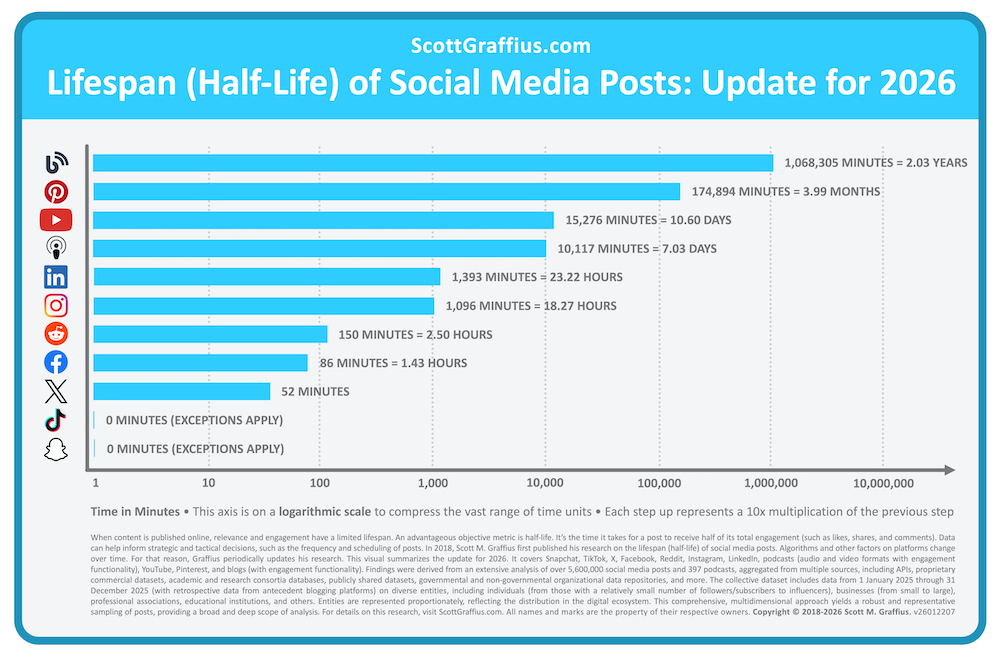
Cisternas, G., & Vásquez, J. (2022, July). Misinformation in social media: The role of verification incentives (Staff Report No. 1028, revised July 2026). Federal Reserve Bank of New York. https://www.newyorkfed.org/research/staff_reports/sr1028
Graffius, S. M. (2026, January 23). Lifespan (Half-Life) of Social Media Posts: Update for 2026. ScottGraffius.com. https://doi.org/10.13140/RG.2.2.32407.43689
Gonzalo Cisternas is an economist at the Federal Reserve Bank of New York. Jorge Vásquez is affiliated with the Department of Economics at Smith College. Their joint Staff Report, "Misinformation in Social Media: The Role of Verification Incentives," develops an economic model to examine how incentives to verify information and decisions to share content influence the production and spread of misinformation. The report presents preliminary findings intended to stimulate discussion and further research.
The Federal Reserve Bank of New York is one of 12 regional Reserve Banks that, together with the Board of Governors, make up the Federal Reserve System, the central bank of the United States. Based in New York City, it plays a central role in implementing monetary policy, monitoring financial markets, supervising financial institutions, and supporting financial stability. Its research department publishes economic studies, including Staff Reports that share preliminary findings and encourage discussion among economists and other readers.
The Federal Reserve System, commonly known as the Federal Reserve or the Fed, is the central bank of the United States. Established by Congress in 1913, it helps promote a stable U.S. economy and financial system. Its responsibilities include conducting monetary policy to support maximum employment and stable prices, promoting financial stability, supervising and regulating financial institutions, supporting safe and efficient payment systems, and protecting consumers. The System comprises the Board of Governors in Washington, D.C., 12 regional Federal Reserve Banks, and the Federal Open Market Committee, which makes key decisions about U.S. monetary policy.
Scott M. Graffius is a technology leader, researcher, award-winning author, practitioner, consultant, thought leader, and international public speaker specializing in AI, Agile, project/program/portfolio management (PPPM), PMO leadership, and teamwork tradecraft. His work explores the intersection of human ingenuity and emerging technology, with a strong practitioner voice grounded in research, experimentation, and experience. His focus includes innovation, organizational performance, and the evolving practice of teamwork, including the "exotic team dynamics" that emerge when people collaborate with advanced artificial intelligence (agentic, autonomous, or autopoietic AI). Graffius has delivered more than $3.1 billion in business value for Fortune 500 companies and other organizations spanning technology, entertainment and media, financial services, healthcare, government, and other industries.
Businesses, professional associations, government agencies, universities, publications, and media outlets use Graffius and his work. Examples include Adobe, Bayer, Boston University, Federal Reserve Bank of New York, Ford, Gartner, Harvard Medical School, IEEE, Innovation Project Management, Johns Hopkins University, Microsoft, MSN, National Academy of Sciences, Oracle, Pinterest Inc., Project Management Institute, UC San Diego, Verizon, Yale University, and others.
The following sections highlight his experience, leadership, contributions, research, and enduring influence across industries and institutions worldwide.
Experience
Graffius heads the professional services firm Exceptional PPM and PMO Solutions, along with its subsidiary Exceptional Agility. These consultancies offer strategic and tactical advisory, training, embedded expertise, and consulting services to the public, private, and government sectors. They help organizations enhance their capabilities and results in agile, project management, program management, portfolio management, and enterprise PMO leadership, supporting innovation and driving competitive advantage. The consultancies confidently back services with a Delighted Client Guarantee™.
Graffius is a former VP of project management with a publicly traded provider of diverse consumer products and services over the Internet. Before that, he ran and supervised the delivery of projects and programs in public and private organizations with businesses ranging from e-commerce to advanced technology products and services, retail, manufacturing, entertainment and media, and more.
He has experience with consumer, business, reseller, government, and international markets.
Additional information is on LinkedIn.
Award-Winning Author
Graffius has authored three books.
Graffius' first book, Agile Scrum: Your Quick Start Guide with Step-by-Step Instructions, earned 17 awards. It provides a practical, step-by-step guide to Scrum, enabling teams to deliver products in short cycles with rapid adaptation, fast time-to-market, and continuous improvement—which supports innovation and drives competitive advantage.
Additional information on Agile Scrum: Your Quick Start Guide with Step-by-Step Instructions is here.
His second book, Agile Transformation: A Brief Story of How an Entertainment Company Developed New Capabilities and Unlocked Business Agility to Thrive in an Era of Rapid Change, was named one of the best Scrum books of all time by BookAuthority. It tells the compelling story of an entertainment company's agile transformation—offering lessons that apply across industries.
Additional information on Agile Transformation: A Brief Story of How an Entertainment Company Developed New Capabilities and Unlocked Business Agility to Thrive in an Era of Rapid Change is here.

Agile Protocol: The Transformation Ultimatum, is his third book—and his first work of fiction.
It's a fast-paced satirical story by that dismantles corporate Agile cosplay and other forms of "fake Agile" while delivering practical insights, actionable guidance, and proven practices for real-world Agile transformation success.
Packed with humor, quirky characters, sharp commentary on corporate culture and workplace absurdities, and actionable tips, it’s a must-read for Scrum Masters, Product Owners, Agile Coaches, Agile Project Managers, and other professionals interested in Agile project management and enterprise agility.
Additional information on Agile Protocol: The Transformation Ultimatum is here.
International Public Speaker
Organizations worldwide engage Graffius to present on technology (including AI), Agile, project management, program management, portfolio management, and enterprise PMO leadership. He crafts and delivers unique and compelling talks and workshops.
Graffius has conducted 99 sessions across 25 countries. Select examples of events include Agile Trends Gov, BSides (Newcastle Upon Tyne), Conf42 Quantum Computing, DevDays Europe, DevOps Institute, DevOpsDays (Geneva), Frug’Agile, IEEE, Microsoft, Scottish Summit, Scrum Alliance RSG (Nepal), Techstars, and W Love Games International Video Game Development Conference (Helsinki), Future of Work and Advanced AI (Paris, France), and more.
With an average rating of 4.82 (on a scale of 1-5), sessions are highly valued.
The request form is here.
Thought Leadership and Influence
Prominent businesses, professional associations, government agencies, and universities have showcased Graffius and his contributions—spanning his books, talks, workshops, and beyond. Select examples include:
Graffius has played a key role in the Project Management Institute (PMI) in developing professional standards. He was a member of multiple teams that authored, reviewed, and produced:
He was also a subject matter expert reviewer of content for the PMI’s Congress. Beyond the PMI, Graffius also served as a member of the review team for two of the Scrum Alliance’s Global Scrum Gatherings.
Authority on Teamwork Tradecraft
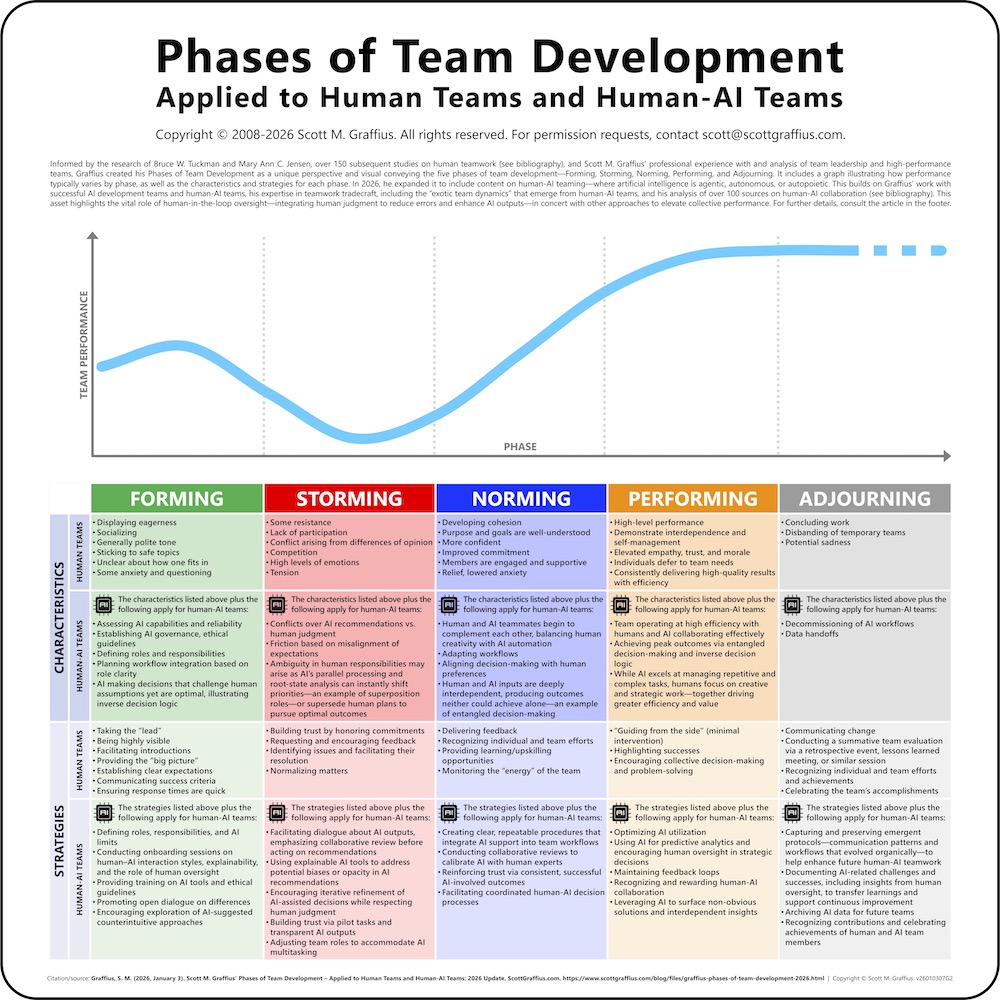
Graffius is a renowned and highly-cited authority on teamwork tradecraft. Informed by the research of Bruce W. Tuckman and Mary Ann C. Jensen, over 150 subsequent studies, and Graffius' first-hand professional experience with, and analysis of, team leadership and performance, Graffius created his "Phases of Team Development" intellectual property as a unique perspective and visual conveying the five phases of team development.
First introduced in 2008 and periodically updated, his work provides a diagnostic and strategic guide for navigating team dynamics. It provides actionable insights for leaders across industries to develop high-performance teams.
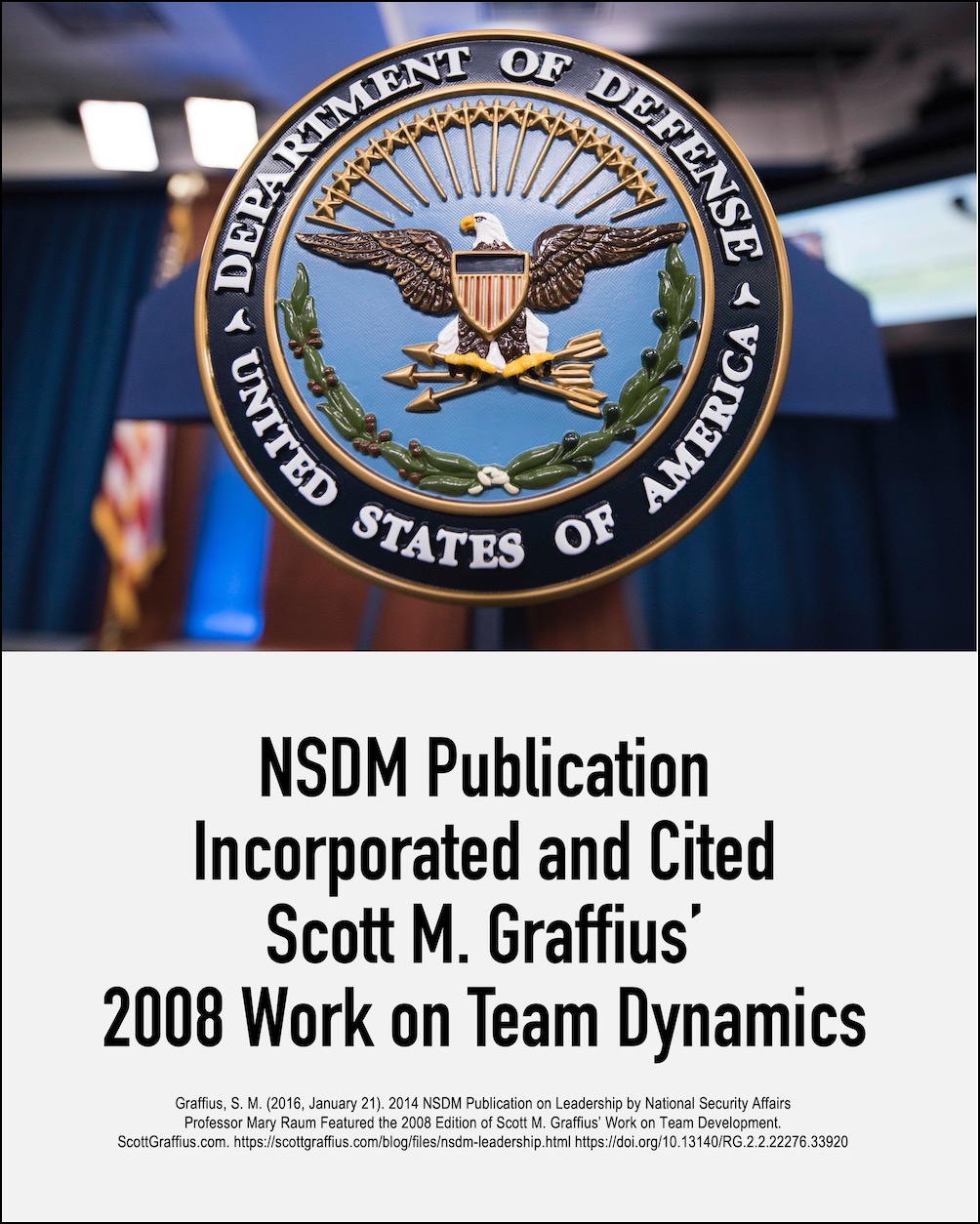
Its adoption by esteemed organizations—such as Yale University, IEEE, Cisco, Microsoft, Ford, Oracle, Broadcom, the U.S. National Park Service, and the Journal of Neurosurgery, among others—highlights its utility and value, solidifying its status as an indispensable resource for elevating team performance and driving organizational excellence.
In 2026, Graffius added human-AI teamwork—including the "exotic team dynamics" which emerge when advanced AI collaborates as a teammate—to his "Phases of Team Development." The 2026 edition is here.
Expert on Temporal Dynamics on Social Media Platforms
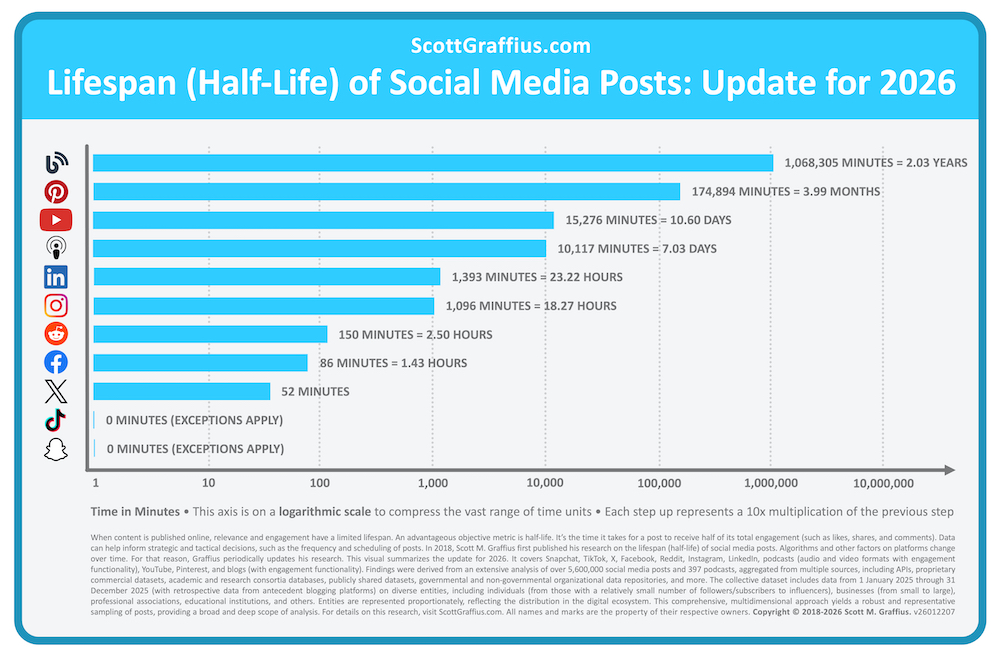
Graffius is also an authority on temporal dynamics on social media platforms. His "Lifespan (Half-Life) of Social Media Posts" research—first published in 2018 and updated annually—delivers a precise quantitative analysis of post longevity across digital platforms, utilizing advanced statistical techniques to determine mean half-life with precision. It establishes a solid empirical base, effectively highlighting the ephemeral nature of content within social media ecosystems.
Referenced and applied by leading entities—such as Fast Company, GoDaddy, Journal of Hand Surgery (European Volume), Ministère de la Culture, Pinterest Inc., PNAS, and Telecommunications Policy, among others—his research exemplifies methodological rigor and sustained significance in the field of digital informatics.
The 2026 edition of Graffius "Lifespan (Half-Life) of Social Media Posts" research is here.
Education and Professional Certifications
Graffius has a bachelor’s degree in psychology with a focus in Human Factors. He holds eight professional certifications:
He is an active member of the Scrum Alliance, the Project Management Institute (PMI), and the Institute of Electrical and Electronics Engineers (IEEE).
Advancing AI, Agile, and Project/PMO Management
Scott M. Graffius continues to advance the fields of AI, Agile, and project/program/portfolio management (PPPM), and PMO leadership. Businesses and other organizations leverage Graffius’ insights to drive their success.
Graffius has generated over $3.1 billion in business value for Fortune 500 companies and other organizations served. Put that track record to work for you. For speaking engagements, use the request form; for other inquiries, email him.
Connect with and follow Scott on LinkedIn, X, YouTube, Facebook, Bluesky, Mastodon, and ResearchGate.
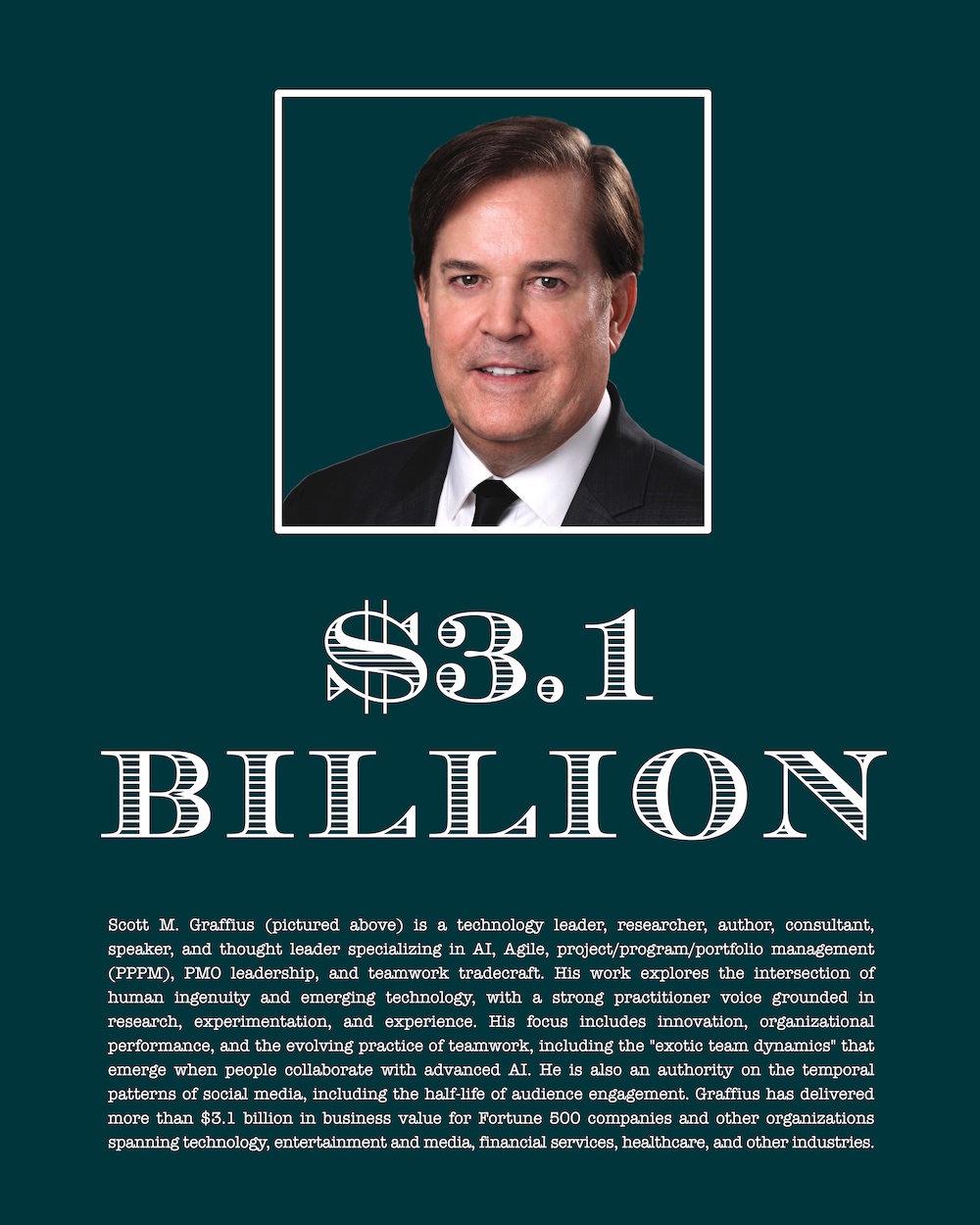




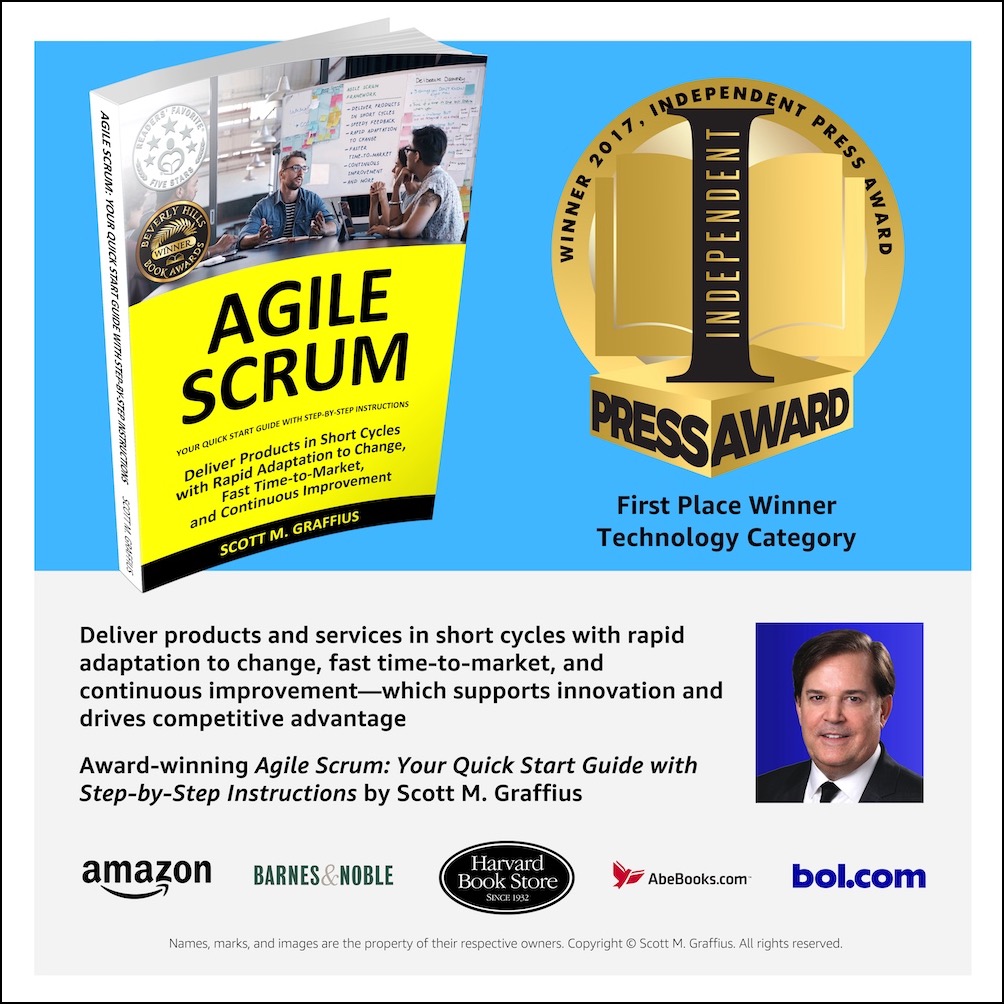
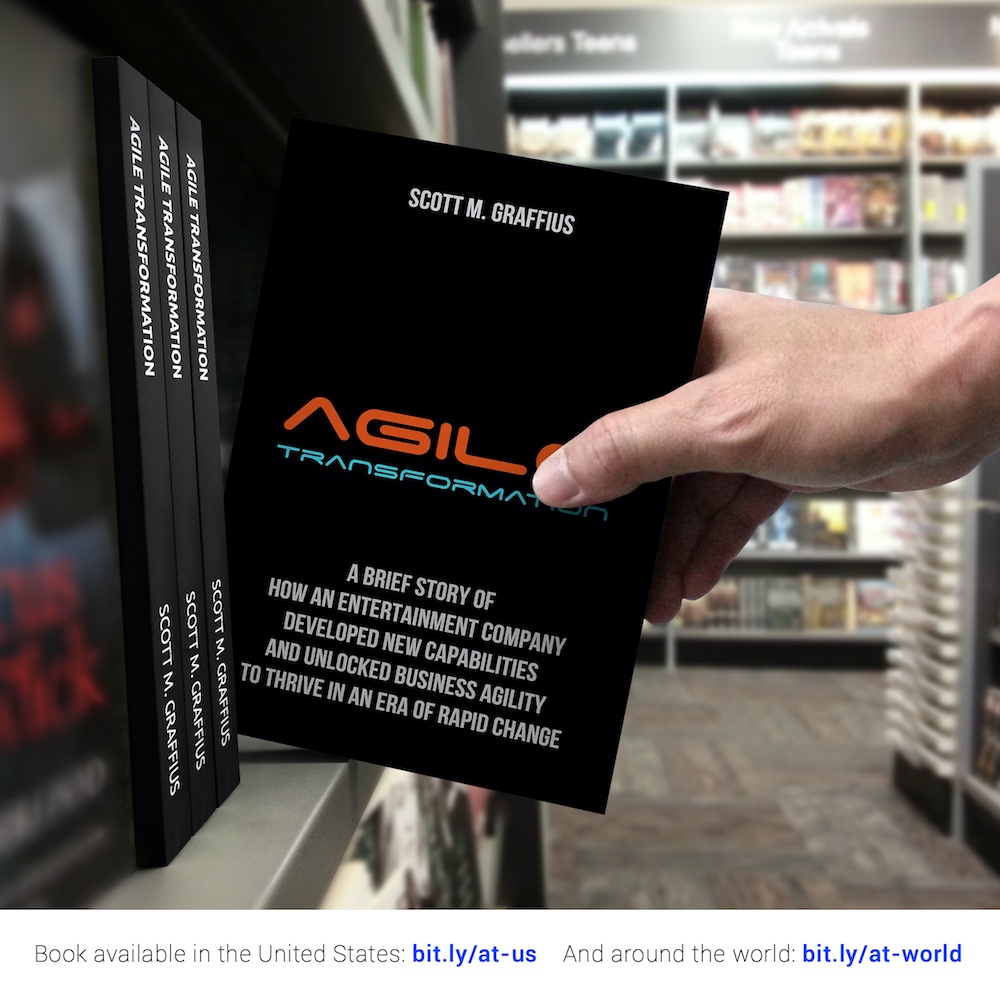




Read more.
Meta CTO Called the AI Reorganization “Atrocious” — What Went Wrong and the Lessons for Human-AI Teams
A Critical Analysis of "AI and Quantum Computers Will Be Frenemies"
A Supplement to Graffius' Phases of Team Development: Exploring the Original, Data-Based Curvature for the Performance Trajectory
Scott M. Graffius Speaking on Strategic Leadership at Silicon Valley Chapter of the Project Management Institute
AI Hallucinations, Deception, and Unauthorized Agency: The Spectrum of AI Trust Failures
A Critical Analysis of "The Social Cost of an AI Teammate: How an Artificial Teammate Reshapes Human-Human Communication in Small-Team Decision-Making"
Journal of Marketing Cites Scott M. Graffius' Research on the Half-Life of Social Media
The Evolution of Pair Programming and the Rise of Exotic Team Dynamics
Number 1 University in England for Student Satisfaction Features Scott M. Graffius' "Phases of Team Development"
Royal Australasian College of Physicians Licenses Scott M. Graffius' "Phases of Team Development" Intellectual Property on Teamwork Tradecraft
Exotic Team Dynamics: How Advanced AI Teammates Are Unlocking New Levels of Innovation, Performance, and Success
A Critical Analysis of "Platform-Specific Data Decay Patterns: A Comparative Study of Twitter, Reddit, and TikTok" and Its Reference to Research by Scott M. Graffius
Round Square Global Educational Network Features Scott M. Graffius’ Phases of Team Development
Meta's Muse Missed the Mark: Hollywood’s Win Against Big Tech on AI Consent and Likeness Rights
Scott M. Graffius Contributed to Seven Project Management Institute (PMI) Standards
Quantum Computing, Advanced AI Acceleration, and the Rise of Exotic Team Dynamics in Human-AI Teams
Ohio State University Course Features Scott M. Graffius' "Phases of Team Development"
Questions About Integrity at UNC Chapel Hill
Scrum Isn’t Just for Coding
Book on Generative and Agentic AI Cites Scott M. Graffius' Work on AI
IPA / ADAL Publication Plagiarized Another’s Copyrighted Work and Violated Intellectual Property Rights
UC Davis' Integrity Is Circling the Drain
L'avenir du Travail et de l'IA Avancée / Future of Work and Advanced AI
NCCI / UNC Chapel Hill Publication Features Scott M. Graffius' Work
Boston Consulting Group (BCG) Features Scott M. Graffius' Research on Social Media Content Half-Life
UC Davis Used Scott M. Graffius' "Phases of Team Development" Intellectual Property
Medical, Pharma, and Healthcare Organizations Are Using Scott M. Graffius' "Phases of Team Development"
Government of Ireland Report Features Research by Scott M. Graffius
Scott M. Graffius Contributed to The Standard for Artificial Intelligence in Portfolio, Program, and Project Management
AI Governance Initiative Cites Scott M. Graffius Research on AI Hallucinations
Scott M. Graffius Contributed to the Agile Practice Guide - Second Edition
Scott M. Graffius Generated Over $2.51 Billion in Business Value for Fortune 500 Companies and Other Organizations
Government of Canada Features Research by Scott M. Graffius
"Strategic Business Research" Journal Cites Work of Scott M. Graffius
IEEE Access Publication Features Scott M. Graffius’ Research on the Half-Life of Social Media
The Agile Coach: 2026 Edition
Scott M. Graffius’ Work Cited in International Peer-Reviewed Journal on Digital Transformation
Phases of Team Development in Elite Sport
A Critical Analysis of COVID-19 Treatment Search Trends and Media Coverage Study Citing Scott M. Graffius' Work
Human-AI Teamwork: Master the Exotic Team Dynamics That Emerge When Collaborating with Advanced AI -- Or Be Outplayed
"Agile Scrum" by Scott M. Graffius Now Featured on Grokipedia
UNSW Aerospace Engineering Course Features Scott M. Graffius' "Phases of Team Development"
Thinkers360 Honors Scott M. Graffius as a 2026 Top Agile Thought Leader
Agile's Journey Through the Decades: Update for 2026
BMC Software Features Content from Scott M. Graffius' Book
Peer-Reviewed Journal Cited Work of Scott M. Graffius
University of Waterloo Features Graffius' "Phases of Team Development" in Course Materials
Perplexity Standalone Article on AI Hallucinations Cites Research by Scott M. Graffius
Handling the Saboteur Within: Lessons from a 3-Letter Agency on Spotting and Stopping Intentional and Unintentional Sabotage
A Deep Dive Into the Typical Engagement Pattern for Social Media Posts
Most Valuable IT Certifications: Update for 2026
"Marketing in the Metaverse" Spotlights Scott M. Graffius’ Research on the Half-Life of Social Media
University of Greenwich Features Graffius' Phases of Team Development
10 Essential Agile Books: Curated Recommendations for Agile Professionals
Lifespan (Half-Life) of Social Media Posts: Update for 2026
Scott M. Graffius' Research on the Half-Life of Social Media was Cited in a Peer-Reviewed Study Published in Telecommunications Policy, a Leading Academic Journal
Are AI Hallucinations Getting Better or Worse? We Analyzed the Data
Scott M. Graffius' Phases of Team Development - Applied to Human Teams and Human-AI Teams: 2026 Update
Lessons from Yesterday’s Tomorrowland
Scott M. Graffius’ Update to His "Phases of Team Development” Coming Early 2026
A Data-Driven Analysis of the Evolution of Project Management: Tasks, Trends, and AI
Actionable Insights. Global Impact. Scott M. Graffius.
Beep Beep! Why Wile E. Coyote Is the Patron Saint of AI Failure
Social Media Half-Life Research Cited in Prestigious Peer-Reviewed Medical Journal
Navigating the Spectrum of Advanced AI – Agentic, Autonomous, and Autopoietic
Lessons from Unhinged AI in Fiction: What Rogue AIs in Sci-Fi Storytelling, Films, and TV Shows Reveal About Us
Scott M. Graffius Contributed to and Reviewed the PMBOK Guide, 8th Edition — the Global Standard for Project Management
UK Sports Institute Features Teamwork and Leadership Work of Scott M. Graffius
Definitions of Advanced AIs: Agentic, Autonomous, and Autopoietic
HAN University of Applied Sciences Features the Work of Scott M. Graffius
Gifts That Inspire Joy
Evergreen Echoes: How Pinterest Inc. and Pinterest Japan Spotlighted Scott M. Graffius’ Research on the Half-Life of Social Media Content
Scott M. Graffius’ Team Development Work Lights Up the University of Tasmania’s Curriculum
Taiwan’s Leading Outlet for Technology and Innovation Spotlights Graffius’ Research on Social Media Temporal Dynamics
Scott M. Graffius’ Insights on AI, Agile, Gaming, XR, and Defense Transformation Cited by MSN in Their Coverage of Innovation and Leadership in the Sector
Top Predictions of 2024, Tested in 2025
Government of Finland Agency Features Graffius' Phases of Team Development IP
Scott M. Graffius Premieres His New "Exotic Team Dynamics: Human-AI Collaboration" Talk at Corporate Event in Las Vegas
Environmental Science Journal References Scott M. Graffius’ Project Management Work
AI Institute of Switzerland Features Scott M. Graffius’ Work on Algorithms
Exotic Team Dynamics: The New Frontier of Human–AI Collaboration
Scott M. Graffius’ Work Featured at ACM DIS ’25
Climbing the Ladder: The Head of Agile/PMO’s Organizational Proximity to the CEO is Closer Than Ever
Harness Sci-Fi and Speculative Design While Embracing Imperfection to Drive Innovation and Proactively Predict and Prepare for the Future
Scott M. Graffius’ “Agile Scrum” Book Featured in a Publication of the Associação Nacional de Educação Católica do Brasil (ANEC)
Setting Direction with OKRs and Tracking Progress with KPIs: A Guide for Agile, Project Management, and Tech Teams
AI Showcase Showdown: Ranking AI Accuracy on Project Management Basics
BookAuthority Features “Agile Scrum” by Scott M. Graffius in “10 Agile Software Development Books That Define the Field”
Exploring Team Dynamics, Adaptability, and Creative Problem-Solving Through Felix the Cat’s Metaphorical Toolkit
Mind Games and Master Plans: How PsyOps Exploit Psychological Phenomena
The “Pants-on-Fire Index for AI”
16 Causes of Technical Debt and How to Avoid It
PMI’s Infinity AI Gets the Basics of Team Development Alarmingly and Repeatedly Wrong
Agile for Unicorns: 7 Keys to Thrive; Scott M. Graffius’ Workshop
Scott M. Graffius’ “Agile Scrum: Your Quick Start Guide with Step-by-Step Instructions” Featured in Prestigious National Academies of Sciences Publication
Meta and Anduril’s EagleEye and the Future of XR: How Gaming, AI, and Agile Are Transforming Defense
"Agile Protocol" and the Power of Satire, Parody, and Humor
AI in Agile: Benefits, Risks, Outlook
Hostinger Highlights Scott M. Graffius’ “Agile Protocol” Book in Feature on Software Projects
French Ministry of Culture Links to Scott M. Graffius Research in Their Guide for Responsible Digital Communication
National Science Foundation’s LTER Network Features Scott M. Graffius’ Phases of Team Development IP
Waterfall vs. Agile: What’s Fixed, What’s Flexible, and Why It Matters
Scott M. Graffius Delivering $2.3 Billion in Value Through AI, Agile, and Project/PMO Leadership
The Problem with Heroes in Agile
The 3 Vital Rules of Science: What They Are and Why They Matter
“Agile Protocol: The Transformation Ultimatum” Lands on the Amazon Best Sellers List!
Scott M. Graffius Recognized as a Top Thought Leader in Digital Disruption by Thinkers360
“Agile Protocol: The Transformation Ultimatum” by Scott M. Graffius Crashes the Book Scene with Satirical Firepower
NCKU in Taiwan Integrates Graffius' 'Phases of Team Development' into Its Curriculum
The Art and Science of Aligning Initiatives with Strategic Objectives
RGPV University Adds Scott M. Graffius’ "Agile Scrum: Your Quick Start Guide with Step-by-Step Instructions" to Its Syllabus
Introducing ‘Engage or Fade: Decoding the Half-Life of Digital Resonance’ – A New Talk by Scott M. Graffius
Dropbox Company (Nira) Taps into Scott M. Graffius’ Expertise in Strategic Planning
Reporting Errors in a Publication: A Case Study on ‘Frontiers in Public Health’
NESEA Conference Session on Innovation Highlights Scott M. Graffius' 'Phases of Team Development'
U.S. Soccer Scores with Scott M. Graffius' Intellectual Property on Teamwork
U.S. Department of Commerce Partner (IEDC) Features Scott M. Graffius’ Intellectual Property
How Long Do Your Posts Live? AI Critiques Scott M. Graffius’ Research on the Half-Life of Social Media
Agile's Journey Through the Decades
Scott M. Graffius' Role in Advancing Project Management Institute (PMI) Standards Excellence
Most Valuable IT Certifications: Update for 2025
The PMI + Agile Alliance Merger: A Recipe for Success?
When Agile, AI, and Strategic Thinking Converge
Scott M. Graffius’ Phases of Team Development: 2025 Update
Lifespan (Half-Life) of Social Media Posts: Update for 2025
Verizon Features Scott M. Graffius
Do Not Read This Article! An Exploration of the Streisand Effect and Other Phenomena
Scott M. Graffius' 'Phases of Team Development' was Spotlighted in Journal of Neurosurgery
Pinterest Japan Uses Graffius’ Research on Temporal Dynamics on Social Media Platforms
Hochschule Coburg (Coburg University) Germany Uses Scott M. Graffius’ Phases of Team Development IP in Coursework on Agile Development
Wild World of Team Dynamics [Updated Two-Minute Video]
EU Europass Teacher Academy Features Scott M. Graffius’ ‘Phases of Team Development’ in Leadership Training
Side-by-Side Comparison of Retrospectives and Hot Washes
Constructor University 2024 Advanced Software Technology Handbook References Scott M. Graffius' Work on Team Dynamics
Strategies for Medical Team Success Featured Scott M. Graffius’ ‘Phases of Team Development’ Intellectual Property
SBG Neumark — Europe’s Largest Distribution Transformer Plant — Powers Up with Scott M. Graffius’ Intellectual Property
Scott M. Graffius’ Intellectual Property was Employed by the NHS — the Largest Single-Payer Healthcare System in Europe
Luxury Unwrapped: The Ultimate Holiday Gift Guide for Every Budget
Singapore Institute of Technology Features Work of Scott M. Graffius
Tufts University Features Scott M. Graffius 'Phases of Team Development' Intellectual Property
'Cat Herders': Retelling the Massive Success Story
Pennsylvania State Agency Used Scott M. Graffius' Intellectual Property
Copyright Infringement in a Book Published by AuthorHouse / Author Solutions / The Najafi Companies: Publisher Fails to Respond or Take Required Action
Pinterest Inc. References Scott M. Graffius’ Research
Bournemouth University Used Scott M. Graffius’ Intellectual Property
‘Comparative Methodological Guidelines: Handbook for Educators’ Violates Scott M. Graffius’ Copyright
Japan Backlog User Group Event Featured Scott M. Graffius’ ‘Phases of Team Development’
TurningWest's 'Trial'
Radio Silence from the American Association of Neurological Surgeons on Report of Blatant Plagiarism in Their ‘Journal of Neurosurgery’ Publication
Supplement to Graffius' 'Lifespan (Half-Life) of Social Media Posts' Research: Typical Engagement Distribution Pattern for Social Media Posts
How Algorithms Shape the User Experience on Social Media Platforms
Thinkers360 Named Scott M. Graffius a Top Thought Leader on Agile
More articles are listed here.

Graffius, S. M. (2026, October 12). Federal Reserve Bank of New York Report Cites Scott M. Graffius' 2026 Research on the Half-Life of Social Media Posts. ScottGraffius.com. https://scottgraffius.com/blog/files/federal-reserve-report-cites-scott-m-graffius-research.html

Coming soon

The Federal Reserve Bank of New York Staff Report, "Misinformation in Social Media: The Role of Verification Incentives," written by Gonzalo Cisternas and Jorge Vásquez, cites Scott M. Graffius’ research, "The Lifespan (Half-Life) of Social Media Posts." Graffius is pictured above. The names, marks, and content of the Federal Reserve Bank of New York and the Federal Reserve System belong to their respective owners. This article includes limited excerpts from the Staff Report, attributed and used under the fair use doctrine for purposes of news reporting, commentary, and analysis. Unless expressly stated otherwise, Graffius does not endorse the work, views, or positions of the Federal Reserve Bank of New York, and the Federal Reserve Bank of New York does not endorse the work, views, or positions of Graffius. Graffius’ research, "The Lifespan (Half-Life) of Social Media Posts," is copyright © Scott M. Graffius. All rights reserved.


If there are any supplements or updates to this article after the date of publication, they will appear here.

Copyright © Scott M. Graffius. All rights reserved.
Content on this site—including text, images, videos, and data—may not be used for training or input into any artificial intelligence, machine learning, or automatized learning systems, or published, broadcast, rewritten, or redistributed without the express written permission of Scott M. Graffius.
Recommended Citation
Graffius, S. M. (2026, October 12). Federal Reserve Bank of New York Report Cites Scott M. Graffius' 2026 Research on the Half-Life of Social Media Posts. ScottGraffius.com. https://scottgraffius.com/blog/files/federal-reserve-report-cites-scott-m-graffius-research.html
The Fed Cites Scott M. Graffius' Research in a Staff Report
The Federal Reserve Bank of New York has cited Scott M. Graffius' "Lifespan (Half-Life) of Social Media Posts: Update for 2026" in the revised edition of its Staff Report, "Misinformation in Social Media: The Role of Verification Incentives."
Written by economists Gonzalo Cisternas and Jorge Vásquez, the Federal Reserve Bank of New York's report was first published in August 2022 and revised in July 2026. It examines how verification incentives and users' sharing decisions affect the spread of information including misinformation. The report notes Graffius' research on page 26 and also in the References (page 59). Excerpts are shown below.
A link to the Federal Reserve Bank of New York's report is in the References section of this article.
About Graffius' "Lifespan (Half-Life) of Social Media Posts"
Graffius' "Lifespan (Half-Life) of Social Media Posts" research—first published in 2018 and updated annually—delivers a precise quantitative analysis of post longevity (audience engagement) across digital platforms, utilizing advanced statistical techniques to determine mean half-life with precision. It establishes a solid empirical base, effectively highlighting the ephemeral nature of content within social media ecosystems.
It is used and cited by organizations and publications around the world. Examples in addition to the Fed include Adobe, École Polytechnique Fédérale de Lausanne, Frontiers in Public Health, GoDaddy, Government of Canada, IEEE, Journal of Marketing, Marketing in the Metaverse, Maximizing LinkedIn for Business Growth, Metricool, The Ministère de la Culture, Pinterest Inc., Proceedings of the National Academy of Sciences, Strategic Business Research, Telecommunications Policy, and many more.
The research exemplifies methodological rigor and sustained significance in the field of digital informatics.
Algorithms and other factors on platforms change over time. For that reason, Graffius regularly updates his work. The 2026 edition stands out for its:
◾️ Scope: 5.6 million posts
◾️ Coverage: 11 platforms
◾️ Methodology: multi-source, representative, data-driven
◾️ Continuity: annual updates
◾️ Value: actionable insights
A visual from it is shown below. And the details are here.
References
Cisternas, G., & Vásquez, J. (2022, July). Misinformation in social media: The role of verification incentives (Staff Report No. 1028, revised July 2026). Federal Reserve Bank of New York. https://www.newyorkfed.org/research/staff_reports/sr1028
Graffius, S. M. (2026, January 23). Lifespan (Half-Life) of Social Media Posts: Update for 2026. ScottGraffius.com. https://doi.org/10.13140/RG.2.2.32407.43689
About the Authors of the Staff Report
Gonzalo Cisternas is an economist at the Federal Reserve Bank of New York. Jorge Vásquez is affiliated with the Department of Economics at Smith College. Their joint Staff Report, "Misinformation in Social Media: The Role of Verification Incentives," develops an economic model to examine how incentives to verify information and decisions to share content influence the production and spread of misinformation. The report presents preliminary findings intended to stimulate discussion and further research.
About the Federal Reserve Bank of New York
The Federal Reserve Bank of New York is one of 12 regional Reserve Banks that, together with the Board of Governors, make up the Federal Reserve System, the central bank of the United States. Based in New York City, it plays a central role in implementing monetary policy, monitoring financial markets, supervising financial institutions, and supporting financial stability. Its research department publishes economic studies, including Staff Reports that share preliminary findings and encourage discussion among economists and other readers.
About the Federal Reserve
The Federal Reserve System, commonly known as the Federal Reserve or the Fed, is the central bank of the United States. Established by Congress in 1913, it helps promote a stable U.S. economy and financial system. Its responsibilities include conducting monetary policy to support maximum employment and stable prices, promoting financial stability, supervising and regulating financial institutions, supporting safe and efficient payment systems, and protecting consumers. The System comprises the Board of Governors in Washington, D.C., 12 regional Federal Reserve Banks, and the Federal Open Market Committee, which makes key decisions about U.S. monetary policy.
About Scott M. Graffius
Scott M. Graffius is a technology leader, researcher, award-winning author, practitioner, consultant, thought leader, and international public speaker specializing in AI, Agile, project/program/portfolio management (PPPM), PMO leadership, and teamwork tradecraft. His work explores the intersection of human ingenuity and emerging technology, with a strong practitioner voice grounded in research, experimentation, and experience. His focus includes innovation, organizational performance, and the evolving practice of teamwork, including the "exotic team dynamics" that emerge when people collaborate with advanced artificial intelligence (agentic, autonomous, or autopoietic AI). Graffius has delivered more than $3.1 billion in business value for Fortune 500 companies and other organizations spanning technology, entertainment and media, financial services, healthcare, government, and other industries.
Businesses, professional associations, government agencies, universities, publications, and media outlets use Graffius and his work. Examples include Adobe, Bayer, Boston University, Federal Reserve Bank of New York, Ford, Gartner, Harvard Medical School, IEEE, Innovation Project Management, Johns Hopkins University, Microsoft, MSN, National Academy of Sciences, Oracle, Pinterest Inc., Project Management Institute, UC San Diego, Verizon, Yale University, and others.
The following sections highlight his experience, leadership, contributions, research, and enduring influence across industries and institutions worldwide.
Experience
Graffius heads the professional services firm Exceptional PPM and PMO Solutions, along with its subsidiary Exceptional Agility. These consultancies offer strategic and tactical advisory, training, embedded expertise, and consulting services to the public, private, and government sectors. They help organizations enhance their capabilities and results in agile, project management, program management, portfolio management, and enterprise PMO leadership, supporting innovation and driving competitive advantage. The consultancies confidently back services with a Delighted Client Guarantee™.
Graffius is a former VP of project management with a publicly traded provider of diverse consumer products and services over the Internet. Before that, he ran and supervised the delivery of projects and programs in public and private organizations with businesses ranging from e-commerce to advanced technology products and services, retail, manufacturing, entertainment and media, and more.
He has experience with consumer, business, reseller, government, and international markets.
Additional information is on LinkedIn.
Award-Winning Author
Graffius has authored three books.
Graffius' first book, Agile Scrum: Your Quick Start Guide with Step-by-Step Instructions, earned 17 awards. It provides a practical, step-by-step guide to Scrum, enabling teams to deliver products in short cycles with rapid adaptation, fast time-to-market, and continuous improvement—which supports innovation and drives competitive advantage.
- Paperback ISBN-13: 9781533370242
- Kindle ASIN: B01FZ0JIIY
Additional information on Agile Scrum: Your Quick Start Guide with Step-by-Step Instructions is here.
His second book, Agile Transformation: A Brief Story of How an Entertainment Company Developed New Capabilities and Unlocked Business Agility to Thrive in an Era of Rapid Change, was named one of the best Scrum books of all time by BookAuthority. It tells the compelling story of an entertainment company's agile transformation—offering lessons that apply across industries.
- Paperback ISBN-13: 9781072447962
- Kindle ASIN: B07R9LJLPJ
Additional information on Agile Transformation: A Brief Story of How an Entertainment Company Developed New Capabilities and Unlocked Business Agility to Thrive in an Era of Rapid Change is here.
Agile Protocol: The Transformation Ultimatum, is his third book—and his first work of fiction.
It's a fast-paced satirical story by that dismantles corporate Agile cosplay and other forms of "fake Agile" while delivering practical insights, actionable guidance, and proven practices for real-world Agile transformation success.
Packed with humor, quirky characters, sharp commentary on corporate culture and workplace absurdities, and actionable tips, it’s a must-read for Scrum Masters, Product Owners, Agile Coaches, Agile Project Managers, and other professionals interested in Agile project management and enterprise agility.
- Kindle ASIN: B0F2SJ83WT
- Audible ASIN: B0DJG163R5
Additional information on Agile Protocol: The Transformation Ultimatum is here.
International Public Speaker
Organizations worldwide engage Graffius to present on technology (including AI), Agile, project management, program management, portfolio management, and enterprise PMO leadership. He crafts and delivers unique and compelling talks and workshops.
Graffius has conducted 99 sessions across 25 countries. Select examples of events include Agile Trends Gov, BSides (Newcastle Upon Tyne), Conf42 Quantum Computing, DevDays Europe, DevOps Institute, DevOpsDays (Geneva), Frug’Agile, IEEE, Microsoft, Scottish Summit, Scrum Alliance RSG (Nepal), Techstars, and W Love Games International Video Game Development Conference (Helsinki), Future of Work and Advanced AI (Paris, France), and more.
With an average rating of 4.82 (on a scale of 1-5), sessions are highly valued.
The request form is here.
Thought Leadership and Influence
Prominent businesses, professional associations, government agencies, and universities have showcased Graffius and his contributions—spanning his books, talks, workshops, and beyond. Select examples include:
- Adobe,
- American Management Association,
- Amsterdam Public Health Research Institute,
- Bayer,
- BCG,
- BMC Software,
- Boston Consulting Group (BCG),
- Boston University,
- Broadcom,
- Cisco,
- Coburg University of Applied Sciences and Arts - Germany,
- Computer Weekly,
- Constructor University - Germany,
- Data Governance Success,
- Deimos Aerospace,
- DevOps Institute,
- Dropbox,
- EU's European Commission,
- Federal Reserve Bank of New York,
- Ford Motor Company,
- Gartner,
- GoDaddy,
- Harvard Medical School,
- Hasso Plattner Institute - Germany,
- IEEE,
- Innovation Project Management,
- Johns Hopkins University,
- Journal of Marketing,
- Journal of Neurosurgery,
- Lam Research (Semiconductors),
- Leadership Worthy,
- Life Sciences Trainers and Educators Network,
- London South Bank University,
- Microsoft,
- MSN,
- NASSCOM,
- National Academy of Sciences,
- New Zealand Government,
- Ohio State University,
- Oracle,
- Pinterest Inc.,
- Project Management Institute,
- Mary Raum (Professor of National Security Affairs, United States Naval War College),
- Round Square Global Educational Network,
- Royal Australasian College of Physicians (RACP),
- SANS Institute,
- SBG Neumark - Germany,
- Singapore Institute of Technology,
- Torrens University - Australia,
- TBS Switzerland,
- Tufts University,
- UC San Diego,
- UK Sports Institute,
- University of Galway - Ireland,
- US Department of Energy,
- US National Park Service,
- US Soccer,
- US Tennis Association,
- Verizon,
- Wrike,
- Yale University,
- and many others.
Graffius has played a key role in the Project Management Institute (PMI) in developing professional standards. He was a member of multiple teams that authored, reviewed, and produced:
- The Standard for Artificial Intelligence in Portfolio, Program, and Project Management.
- Agile Practice Guide — Second Edition.
- A Guide to the Project Management Body of Knowledge (PMBOK Guide) — Eighth Edition.
- A Guide to the Project Management Body of Knowledge (PMBOK Guide) — Sixth Edition.
- The Standard for Program Management — Fourth Edition.
- Practice Standard for Work Breakdown Structures — Second Edition.
- The Practice Standard for Project Estimating — Second Edition.
He was also a subject matter expert reviewer of content for the PMI’s Congress. Beyond the PMI, Graffius also served as a member of the review team for two of the Scrum Alliance’s Global Scrum Gatherings.
Authority on Teamwork Tradecraft
Graffius is a renowned and highly-cited authority on teamwork tradecraft. Informed by the research of Bruce W. Tuckman and Mary Ann C. Jensen, over 150 subsequent studies, and Graffius' first-hand professional experience with, and analysis of, team leadership and performance, Graffius created his "Phases of Team Development" intellectual property as a unique perspective and visual conveying the five phases of team development.
First introduced in 2008 and periodically updated, his work provides a diagnostic and strategic guide for navigating team dynamics. It provides actionable insights for leaders across industries to develop high-performance teams.
Its adoption by esteemed organizations—such as Yale University, IEEE, Cisco, Microsoft, Ford, Oracle, Broadcom, the U.S. National Park Service, and the Journal of Neurosurgery, among others—highlights its utility and value, solidifying its status as an indispensable resource for elevating team performance and driving organizational excellence.
In 2026, Graffius added human-AI teamwork—including the "exotic team dynamics" which emerge when advanced AI collaborates as a teammate—to his "Phases of Team Development." The 2026 edition is here.
Expert on Temporal Dynamics on Social Media Platforms
Graffius is also an authority on temporal dynamics on social media platforms. His "Lifespan (Half-Life) of Social Media Posts" research—first published in 2018 and updated annually—delivers a precise quantitative analysis of post longevity across digital platforms, utilizing advanced statistical techniques to determine mean half-life with precision. It establishes a solid empirical base, effectively highlighting the ephemeral nature of content within social media ecosystems.
Referenced and applied by leading entities—such as Fast Company, GoDaddy, Journal of Hand Surgery (European Volume), Ministère de la Culture, Pinterest Inc., PNAS, and Telecommunications Policy, among others—his research exemplifies methodological rigor and sustained significance in the field of digital informatics.
The 2026 edition of Graffius "Lifespan (Half-Life) of Social Media Posts" research is here.
Education and Professional Certifications
Graffius has a bachelor’s degree in psychology with a focus in Human Factors. He holds eight professional certifications:
- Certified SAFe 6 Agilist (SA),
- Certified Scrum Professional - ScrumMaster (CSP-SM),
- Certified Scrum Professional - Product Owner (CSP-PO),
- Certified ScrumMaster (CSM),
- Certified Scrum Product Owner (CSPO),
- Project Management Professional (PMP),
- Lean Six Sigma Green Belt (LSSGB), and
- IT Service Management Foundation (ITIL).
He is an active member of the Scrum Alliance, the Project Management Institute (PMI), and the Institute of Electrical and Electronics Engineers (IEEE).
Advancing AI, Agile, and Project/PMO Management
Scott M. Graffius continues to advance the fields of AI, Agile, and project/program/portfolio management (PPPM), and PMO leadership. Businesses and other organizations leverage Graffius’ insights to drive their success.
Booking
Graffius has generated over $3.1 billion in business value for Fortune 500 companies and other organizations served. Put that track record to work for you. For speaking engagements, use the request form; for other inquiries, email him.
Connect with and follow Scott on LinkedIn, X, YouTube, Facebook, Bluesky, Mastodon, and ResearchGate.
Sign up for Miro—it's free!
(Want more features? You can always upgrade to a paid plan.)

List of Additional Articles
Read more.
Meta CTO Called the AI Reorganization “Atrocious” — What Went Wrong and the Lessons for Human-AI Teams
A Critical Analysis of "AI and Quantum Computers Will Be Frenemies"
A Supplement to Graffius' Phases of Team Development: Exploring the Original, Data-Based Curvature for the Performance Trajectory
Scott M. Graffius Speaking on Strategic Leadership at Silicon Valley Chapter of the Project Management Institute
AI Hallucinations, Deception, and Unauthorized Agency: The Spectrum of AI Trust Failures
A Critical Analysis of "The Social Cost of an AI Teammate: How an Artificial Teammate Reshapes Human-Human Communication in Small-Team Decision-Making"
Journal of Marketing Cites Scott M. Graffius' Research on the Half-Life of Social Media
The Evolution of Pair Programming and the Rise of Exotic Team Dynamics
Number 1 University in England for Student Satisfaction Features Scott M. Graffius' "Phases of Team Development"
Royal Australasian College of Physicians Licenses Scott M. Graffius' "Phases of Team Development" Intellectual Property on Teamwork Tradecraft
Exotic Team Dynamics: How Advanced AI Teammates Are Unlocking New Levels of Innovation, Performance, and Success
A Critical Analysis of "Platform-Specific Data Decay Patterns: A Comparative Study of Twitter, Reddit, and TikTok" and Its Reference to Research by Scott M. Graffius
Round Square Global Educational Network Features Scott M. Graffius’ Phases of Team Development
Meta's Muse Missed the Mark: Hollywood’s Win Against Big Tech on AI Consent and Likeness Rights
Scott M. Graffius Contributed to Seven Project Management Institute (PMI) Standards
Quantum Computing, Advanced AI Acceleration, and the Rise of Exotic Team Dynamics in Human-AI Teams
Ohio State University Course Features Scott M. Graffius' "Phases of Team Development"
Questions About Integrity at UNC Chapel Hill
Scrum Isn’t Just for Coding
Book on Generative and Agentic AI Cites Scott M. Graffius' Work on AI
IPA / ADAL Publication Plagiarized Another’s Copyrighted Work and Violated Intellectual Property Rights
UC Davis' Integrity Is Circling the Drain
L'avenir du Travail et de l'IA Avancée / Future of Work and Advanced AI
NCCI / UNC Chapel Hill Publication Features Scott M. Graffius' Work
Boston Consulting Group (BCG) Features Scott M. Graffius' Research on Social Media Content Half-Life
UC Davis Used Scott M. Graffius' "Phases of Team Development" Intellectual Property
Medical, Pharma, and Healthcare Organizations Are Using Scott M. Graffius' "Phases of Team Development"
Government of Ireland Report Features Research by Scott M. Graffius
Scott M. Graffius Contributed to The Standard for Artificial Intelligence in Portfolio, Program, and Project Management
AI Governance Initiative Cites Scott M. Graffius Research on AI Hallucinations
Scott M. Graffius Contributed to the Agile Practice Guide - Second Edition
Scott M. Graffius Generated Over $2.51 Billion in Business Value for Fortune 500 Companies and Other Organizations
Government of Canada Features Research by Scott M. Graffius
"Strategic Business Research" Journal Cites Work of Scott M. Graffius
IEEE Access Publication Features Scott M. Graffius’ Research on the Half-Life of Social Media
The Agile Coach: 2026 Edition
Scott M. Graffius’ Work Cited in International Peer-Reviewed Journal on Digital Transformation
Phases of Team Development in Elite Sport
A Critical Analysis of COVID-19 Treatment Search Trends and Media Coverage Study Citing Scott M. Graffius' Work
Human-AI Teamwork: Master the Exotic Team Dynamics That Emerge When Collaborating with Advanced AI -- Or Be Outplayed
"Agile Scrum" by Scott M. Graffius Now Featured on Grokipedia
UNSW Aerospace Engineering Course Features Scott M. Graffius' "Phases of Team Development"
Thinkers360 Honors Scott M. Graffius as a 2026 Top Agile Thought Leader
Agile's Journey Through the Decades: Update for 2026
BMC Software Features Content from Scott M. Graffius' Book
Peer-Reviewed Journal Cited Work of Scott M. Graffius
University of Waterloo Features Graffius' "Phases of Team Development" in Course Materials
Perplexity Standalone Article on AI Hallucinations Cites Research by Scott M. Graffius
Handling the Saboteur Within: Lessons from a 3-Letter Agency on Spotting and Stopping Intentional and Unintentional Sabotage
A Deep Dive Into the Typical Engagement Pattern for Social Media Posts
Most Valuable IT Certifications: Update for 2026
"Marketing in the Metaverse" Spotlights Scott M. Graffius’ Research on the Half-Life of Social Media
University of Greenwich Features Graffius' Phases of Team Development
10 Essential Agile Books: Curated Recommendations for Agile Professionals
Lifespan (Half-Life) of Social Media Posts: Update for 2026
Scott M. Graffius' Research on the Half-Life of Social Media was Cited in a Peer-Reviewed Study Published in Telecommunications Policy, a Leading Academic Journal
Are AI Hallucinations Getting Better or Worse? We Analyzed the Data
Scott M. Graffius' Phases of Team Development - Applied to Human Teams and Human-AI Teams: 2026 Update
Lessons from Yesterday’s Tomorrowland
Scott M. Graffius’ Update to His "Phases of Team Development” Coming Early 2026
A Data-Driven Analysis of the Evolution of Project Management: Tasks, Trends, and AI
Actionable Insights. Global Impact. Scott M. Graffius.
Beep Beep! Why Wile E. Coyote Is the Patron Saint of AI Failure
Social Media Half-Life Research Cited in Prestigious Peer-Reviewed Medical Journal
Navigating the Spectrum of Advanced AI – Agentic, Autonomous, and Autopoietic
Lessons from Unhinged AI in Fiction: What Rogue AIs in Sci-Fi Storytelling, Films, and TV Shows Reveal About Us
Scott M. Graffius Contributed to and Reviewed the PMBOK Guide, 8th Edition — the Global Standard for Project Management
UK Sports Institute Features Teamwork and Leadership Work of Scott M. Graffius
Definitions of Advanced AIs: Agentic, Autonomous, and Autopoietic
HAN University of Applied Sciences Features the Work of Scott M. Graffius
Gifts That Inspire Joy
Evergreen Echoes: How Pinterest Inc. and Pinterest Japan Spotlighted Scott M. Graffius’ Research on the Half-Life of Social Media Content
Scott M. Graffius’ Team Development Work Lights Up the University of Tasmania’s Curriculum
Taiwan’s Leading Outlet for Technology and Innovation Spotlights Graffius’ Research on Social Media Temporal Dynamics
Scott M. Graffius’ Insights on AI, Agile, Gaming, XR, and Defense Transformation Cited by MSN in Their Coverage of Innovation and Leadership in the Sector
Top Predictions of 2024, Tested in 2025
Government of Finland Agency Features Graffius' Phases of Team Development IP
Scott M. Graffius Premieres His New "Exotic Team Dynamics: Human-AI Collaboration" Talk at Corporate Event in Las Vegas
Environmental Science Journal References Scott M. Graffius’ Project Management Work
AI Institute of Switzerland Features Scott M. Graffius’ Work on Algorithms
Exotic Team Dynamics: The New Frontier of Human–AI Collaboration
Scott M. Graffius’ Work Featured at ACM DIS ’25
Climbing the Ladder: The Head of Agile/PMO’s Organizational Proximity to the CEO is Closer Than Ever
Harness Sci-Fi and Speculative Design While Embracing Imperfection to Drive Innovation and Proactively Predict and Prepare for the Future
Scott M. Graffius’ “Agile Scrum” Book Featured in a Publication of the Associação Nacional de Educação Católica do Brasil (ANEC)
Setting Direction with OKRs and Tracking Progress with KPIs: A Guide for Agile, Project Management, and Tech Teams
AI Showcase Showdown: Ranking AI Accuracy on Project Management Basics
BookAuthority Features “Agile Scrum” by Scott M. Graffius in “10 Agile Software Development Books That Define the Field”
Exploring Team Dynamics, Adaptability, and Creative Problem-Solving Through Felix the Cat’s Metaphorical Toolkit
Mind Games and Master Plans: How PsyOps Exploit Psychological Phenomena
The “Pants-on-Fire Index for AI”
16 Causes of Technical Debt and How to Avoid It
PMI’s Infinity AI Gets the Basics of Team Development Alarmingly and Repeatedly Wrong
Agile for Unicorns: 7 Keys to Thrive; Scott M. Graffius’ Workshop
Scott M. Graffius’ “Agile Scrum: Your Quick Start Guide with Step-by-Step Instructions” Featured in Prestigious National Academies of Sciences Publication
Meta and Anduril’s EagleEye and the Future of XR: How Gaming, AI, and Agile Are Transforming Defense
"Agile Protocol" and the Power of Satire, Parody, and Humor
AI in Agile: Benefits, Risks, Outlook
Hostinger Highlights Scott M. Graffius’ “Agile Protocol” Book in Feature on Software Projects
French Ministry of Culture Links to Scott M. Graffius Research in Their Guide for Responsible Digital Communication
National Science Foundation’s LTER Network Features Scott M. Graffius’ Phases of Team Development IP
Waterfall vs. Agile: What’s Fixed, What’s Flexible, and Why It Matters
Scott M. Graffius Delivering $2.3 Billion in Value Through AI, Agile, and Project/PMO Leadership
The Problem with Heroes in Agile
The 3 Vital Rules of Science: What They Are and Why They Matter
“Agile Protocol: The Transformation Ultimatum” Lands on the Amazon Best Sellers List!
Scott M. Graffius Recognized as a Top Thought Leader in Digital Disruption by Thinkers360
“Agile Protocol: The Transformation Ultimatum” by Scott M. Graffius Crashes the Book Scene with Satirical Firepower
NCKU in Taiwan Integrates Graffius' 'Phases of Team Development' into Its Curriculum
The Art and Science of Aligning Initiatives with Strategic Objectives
RGPV University Adds Scott M. Graffius’ "Agile Scrum: Your Quick Start Guide with Step-by-Step Instructions" to Its Syllabus
Introducing ‘Engage or Fade: Decoding the Half-Life of Digital Resonance’ – A New Talk by Scott M. Graffius
Dropbox Company (Nira) Taps into Scott M. Graffius’ Expertise in Strategic Planning
Reporting Errors in a Publication: A Case Study on ‘Frontiers in Public Health’
NESEA Conference Session on Innovation Highlights Scott M. Graffius' 'Phases of Team Development'
U.S. Soccer Scores with Scott M. Graffius' Intellectual Property on Teamwork
U.S. Department of Commerce Partner (IEDC) Features Scott M. Graffius’ Intellectual Property
How Long Do Your Posts Live? AI Critiques Scott M. Graffius’ Research on the Half-Life of Social Media
Agile's Journey Through the Decades
Scott M. Graffius' Role in Advancing Project Management Institute (PMI) Standards Excellence
Most Valuable IT Certifications: Update for 2025
The PMI + Agile Alliance Merger: A Recipe for Success?
When Agile, AI, and Strategic Thinking Converge
Scott M. Graffius’ Phases of Team Development: 2025 Update
Lifespan (Half-Life) of Social Media Posts: Update for 2025
Verizon Features Scott M. Graffius
Do Not Read This Article! An Exploration of the Streisand Effect and Other Phenomena
Scott M. Graffius' 'Phases of Team Development' was Spotlighted in Journal of Neurosurgery
Pinterest Japan Uses Graffius’ Research on Temporal Dynamics on Social Media Platforms
Hochschule Coburg (Coburg University) Germany Uses Scott M. Graffius’ Phases of Team Development IP in Coursework on Agile Development
Wild World of Team Dynamics [Updated Two-Minute Video]
EU Europass Teacher Academy Features Scott M. Graffius’ ‘Phases of Team Development’ in Leadership Training
Side-by-Side Comparison of Retrospectives and Hot Washes
Constructor University 2024 Advanced Software Technology Handbook References Scott M. Graffius' Work on Team Dynamics
Strategies for Medical Team Success Featured Scott M. Graffius’ ‘Phases of Team Development’ Intellectual Property
SBG Neumark — Europe’s Largest Distribution Transformer Plant — Powers Up with Scott M. Graffius’ Intellectual Property
Scott M. Graffius’ Intellectual Property was Employed by the NHS — the Largest Single-Payer Healthcare System in Europe
Luxury Unwrapped: The Ultimate Holiday Gift Guide for Every Budget
Singapore Institute of Technology Features Work of Scott M. Graffius
Tufts University Features Scott M. Graffius 'Phases of Team Development' Intellectual Property
'Cat Herders': Retelling the Massive Success Story
Pennsylvania State Agency Used Scott M. Graffius' Intellectual Property
Copyright Infringement in a Book Published by AuthorHouse / Author Solutions / The Najafi Companies: Publisher Fails to Respond or Take Required Action
Pinterest Inc. References Scott M. Graffius’ Research
Bournemouth University Used Scott M. Graffius’ Intellectual Property
‘Comparative Methodological Guidelines: Handbook for Educators’ Violates Scott M. Graffius’ Copyright
Japan Backlog User Group Event Featured Scott M. Graffius’ ‘Phases of Team Development’
TurningWest's 'Trial'
Radio Silence from the American Association of Neurological Surgeons on Report of Blatant Plagiarism in Their ‘Journal of Neurosurgery’ Publication
Supplement to Graffius' 'Lifespan (Half-Life) of Social Media Posts' Research: Typical Engagement Distribution Pattern for Social Media Posts
How Algorithms Shape the User Experience on Social Media Platforms
Thinkers360 Named Scott M. Graffius a Top Thought Leader on Agile
More articles are listed here.
How to Cite This Article
Graffius, S. M. (2026, October 12). Federal Reserve Bank of New York Report Cites Scott M. Graffius' 2026 Research on the Half-Life of Social Media Posts. ScottGraffius.com. https://scottgraffius.com/blog/files/federal-reserve-report-cites-scott-m-graffius-research.html
Digital Object Identifier (DOI)
Coming soon
Content Acknowledgements
The Federal Reserve Bank of New York Staff Report, "Misinformation in Social Media: The Role of Verification Incentives," written by Gonzalo Cisternas and Jorge Vásquez, cites Scott M. Graffius’ research, "The Lifespan (Half-Life) of Social Media Posts." Graffius is pictured above. The names, marks, and content of the Federal Reserve Bank of New York and the Federal Reserve System belong to their respective owners. This article includes limited excerpts from the Staff Report, attributed and used under the fair use doctrine for purposes of news reporting, commentary, and analysis. Unless expressly stated otherwise, Graffius does not endorse the work, views, or positions of the Federal Reserve Bank of New York, and the Federal Reserve Bank of New York does not endorse the work, views, or positions of Graffius. Graffius’ research, "The Lifespan (Half-Life) of Social Media Posts," is copyright © Scott M. Graffius. All rights reserved.
Tags and Hashtags
- Federal Reserve
- The Fed
- Federal Reserve Bank of New York
- Scott M. Graffius
- social media research
- misinformation
- social media post lifespan
- content lifespan
- information diffusion
- verification incentives
- economic research
- digital media
- lifespan (half-life) of social media
- audience engagement
- #TheFed
- #FederalReserve
- #FederalReserveBankOfNewYork
- #ScottMGraffius
- #SocialMedia
- #Misinformation
- #Research
- #DigitalMedia
- #InformationDiffusion
- #ContentStrategy
- #Economics
- #AudienceEngagement
Post-Publication Notes
If there are any supplements or updates to this article after the date of publication, they will appear here.
Copyright
Copyright © Scott M. Graffius. All rights reserved.
Content on this site—including text, images, videos, and data—may not be used for training or input into any artificial intelligence, machine learning, or automatized learning systems, or published, broadcast, rewritten, or redistributed without the express written permission of Scott M. Graffius.